You press the accelerator, expecting your car to take off smoothly, but instead it hesitates. Maybe it stumbles for a second before picking up speed. Maybe it jerks when you're merging onto the highway. Or maybe you press the gas and the engine seems to think about it before doing anything.
Not exactly confidence-inspiring when you're trying to get across an intersection.
So, why does your car hesitate when accelerating?
The short answer is that several systems can produce similar symptoms. Ignition problems, fuel delivery, airflow measurements, electronic controls, and even transmission concerns can all affect how your vehicle responds.
And here's where things get interesting: Your car can hesitate without ever turning on the check engine light.
Let's break down seven possible causes, the symptoms worth paying attention to, and when it's time to have the problem properly diagnosed.
What Does Engine Hesitation Actually Feel Like?
Engine hesitation is a delay, stumble, or interruption in power when you ask the vehicle to accelerate. Different drivers describe the same general concern in different ways.
These symptoms don't necessarily indicate the same failure. An engine misfire under load may feel similar to a transmission slipping or a vehicle entering reduced-power mode.
That's why when the problem happens is often just as important as what it feels like.
1. Worn Spark Plugs or Failing Ignition Coils
Gasoline engines depend on the correct air-fuel mixture, sufficient compression, and properly timed ignition to produce power.
When the ignition system isn't operating correctly, the engine may struggle to ignite that mixture consistently. Worn spark plugs, deteriorated coil boots, or failing ignition coils can cause misfires, especially when the engine is under load.
Common Signs of an Ignition Concern
- Hesitation during harder acceleration
- Jerking while climbing hills
- Intermittent engine shaking
- Rough idle or reduced performance
- A steady or flashing check engine light
However, hesitation doesn't automatically mean the vehicle needs spark plugs or coils. Fuel delivery, compression, and other mechanical concerns can produce similar symptoms.
The actual source needs to be confirmed before parts are replaced.
Learn more about our spark plug and ignition services.
2. Fuel Delivery Problems
Your engine requires the correct amount of fuel at the appropriate pressure and timing. During acceleration, fuel demand increases, and weaknesses in the delivery system may become more noticeable.
A weak fuel pump, restricted fuel supply, faulty pressure regulation, injector malfunction, or an electrical control problem can interrupt normal acceleration.
Possible Fuel-System Symptoms
- Hesitation under heavier throttle
- Loss of power at highway speeds
- Stumbling when climbing hills
- Extended cranking before starting
- Intermittent stalling
But here's an important distinction: A fuel-pressure problem does not automatically mean the fuel pump is bad.
Electrical supply problems, pump-control systems, pressure regulation, and other components can create similar conditions.
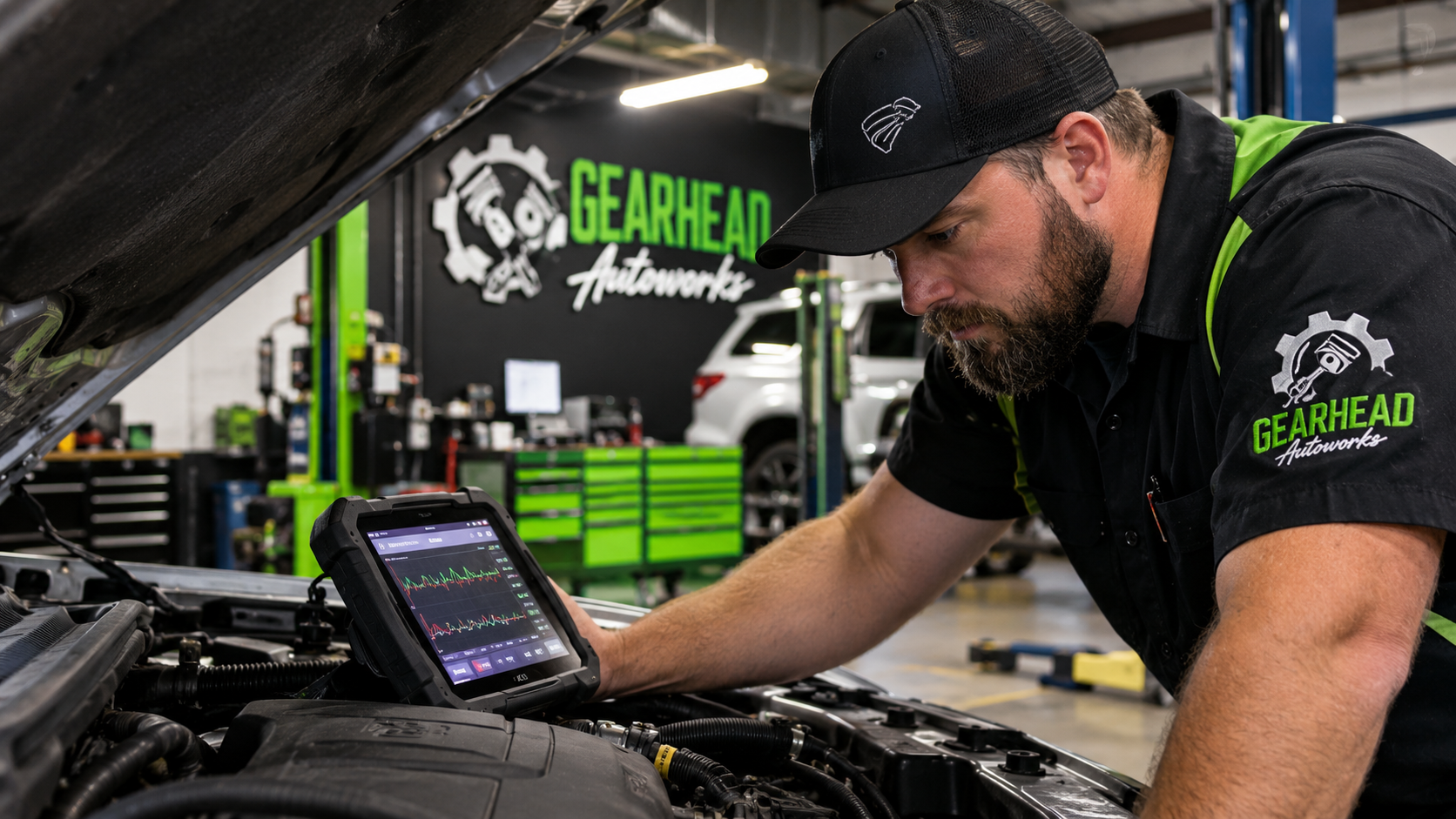
Proper testing may include fuel pressure and delivery measurements, fuel-trim analysis, scan-tool data, and electrical checks appropriate for the vehicle.
Our fuel system services focus on identifying the cause before recommending replacement parts.
3. Incorrect Airflow or Sensor Information
Modern engines rely on a network of sensors to determine how they should respond to changing driving conditions.
Depending on the vehicle, those inputs may include mass airflow, manifold pressure, oxygen sensor, throttle-position, and accelerator-pedal data.
When the engine computer receives inaccurate information, fuel delivery or throttle response may be affected.
A Sensor Code Doesn't Always Mean a Bad Sensor
An airflow-related fault code may be caused by an intake leak, wiring problem, incorrect sensor reading, or another engine operating condition.
Replacing a mass airflow sensor because a code mentioned airflow may accomplish absolutely nothing if the real problem is elsewhere.
Trouble codes provide direction for testing. They aren't automatic parts-ordering instructions.
This is why diagnostic data needs to be interpreted in context rather than relying on a single code or reading.
4. Electronic Throttle Control Problems
Many modern vehicles don't use a traditional mechanical throttle cable.
Instead, accelerator-pedal sensors communicate driver demand to the engine control system, which commands the electronic throttle body.
Problems with sensors, wiring, throttle-body operation, or related controls may cause delayed response, intermittent hesitation, or reduced power.
What Drivers May Notice
- Delayed accelerator response
- Inconsistent acceleration
- Electronic throttle warning lights
- Sudden reduced engine power
- Intermittent hesitation
Not every gradual throttle response is a malfunction. Some vehicles are intentionally programmed for smoother acceleration.
However, a new or worsening delay—particularly one accompanied by warning lights—deserves attention.
5. Carbon Buildup and Intake Restrictions
Carbon deposits can accumulate in certain areas of an engine's intake system over time.
On some gasoline direct-injection engines, deposits on the intake valves may interfere with airflow and contribute to drivability concerns.
A contaminated throttle body or another intake restriction may also affect engine performance under certain conditions.
However, finding carbon buildup doesn't prove it's responsible for the hesitation.
Some engines accumulate deposits without noticeable problems, while other vehicles have a completely different cause for their symptoms.
Before recommending cleaning or repair, the suspected condition should be connected to the actual complaint.
6. Transmission or Drivetrain Problems
Here's where things can get a little tricky: not every hesitation a driver feels is actually coming from the engine.
A transmission that slips, shifts unpredictably, or delays engagement can make the vehicle feel as though the engine isn't responding properly.
Torque converter concerns and other drivetrain faults may create similar complaints.
| What You're Noticing | Why It Matters |
|---|---|
| RPM rises without matching vehicle speed | May suggest slipping or a drivetrain concern |
| Hesitation occurs during a gear change | Shift behavior needs evaluation |
| Engine stumbles without a shift | Engine performance needs closer attention |
| Problem occurs only after warming up | Temperature may be an important diagnostic clue |
These clues aren't definitive tests, but they help distinguish between an engine performance issue and a transmission or drivetrain concern.
The important part is identifying which system is responsible before recommending repairs.
7. Intermittent Electrical Problems
Sometimes the most frustrating vehicle problems are the ones that refuse to happen consistently.
A loose electrical connection, damaged wiring harness, inadequate ground, failing relay, or intermittent component can disrupt normal engine operation.
Temperature, vibration, moisture, and engine movement may influence the fault.
One day the car runs perfectly. The next day it stumbles during acceleration and then acts like nothing happened.
Intermittent drivability complaints can require additional testing and symptom verification.
That's where a methodical approach matters. Our diagnostic and electrical services are designed around following the evidence, not guessing which component might be failing.
What Does the Timing of the Hesitation Tell Us?
One of the most valuable things you can tell a technician is exactly when the problem occurs.
| When It Happens | Possible Areas to Investigate |
|---|---|
| Accelerating from a complete stop | Throttle response, fuel delivery, ignition, transmission engagement |
| Climbing hills or passing | Ignition under load, fuel delivery, engine performance |
| Only when the engine is hot | Heat-related electrical, fuel, or mechanical concerns |
| During a specific gear change | Transmission operation and related controls |
| Intermittently with no warning light | Conditions requiring symptom verification and live-data analysis |
These are diagnostic starting points, not confirmed causes.
Why Does My Car Hesitate Without a Check Engine Light?
Because not every problem immediately meets the conditions required to illuminate a warning light.
Some faults happen too briefly or under operating conditions that don't trigger a confirmed diagnostic trouble code.
Other problems may involve mechanical or drivetrain behavior that isn't immediately recognized as an engine-management fault.
There may still be useful information available through pending codes, stored history, or live diagnostic data.
But there is no guarantee a code will be present.
No Warning Light Doesn't Mean No Problem
If your vehicle repeatedly hesitates, the concern deserves investigation even without a dashboard warning.
A diagnostic process starts with verifying what the vehicle is doing—not waiting for a code to tell us what part to replace.
Also read: Why Is My Check Engine Light On If My Car Drives Fine?
Is It Safe to Drive a Car That's Hesitating?
That depends on how severe the hesitation is, how frequently it occurs, and whether other symptoms are present.
A mild occasional stumble may not seem serious, but it can become more pronounced without warning.
When to Stop Driving
Pull over safely and arrange appropriate assistance if your vehicle experiences:
- A flashing check engine light
- Severe or sudden loss of power
- Repeated stalling in traffic
- Dangerously unpredictable acceleration
- Overheating, smoke, or a strong fuel odor
- Unusual mechanical noises with the hesitation
A flashing check engine light may indicate a severe misfire capable of damaging the catalytic converter.
If the hesitation is mild but recurring, schedule an inspection before relying on the vehicle in demanding driving conditions.
Frequently Asked Questions
Can bad spark plugs cause hesitation when accelerating?
Yes. Worn plugs or ignition components can cause misfires, especially under load. However, hesitation alone isn't proof that spark plugs are the problem. Fuel delivery and mechanical concerns can produce similar symptoms.
Can a bad fuel pump make my car hesitate?
Yes. Insufficient fuel delivery can affect acceleration, particularly when demand increases. But pump-control faults, pressure regulation, electrical problems, and other conditions can mimic a failing fuel pump.
Why does my car hesitate when accelerating from a stop?
Transitioning from idle to acceleration changes engine load and fuel demand. Ignition, airflow, throttle control, fuel delivery, and transmission engagement can all affect the response. Identifying whether the engine stumbles or the vehicle simply delays moving helps direct testing.
Why does my car hesitate more when it's hot?
Heat can influence electrical connections, sensors, ignition components, and fuel-system behavior. A heat-related pattern is a valuable diagnostic clue, but it does not identify a specific failed part by itself.
Can my transmission feel like engine hesitation?
Yes. Slipping, delayed engagement, or abnormal shifting can feel similar to an engine power problem. Road testing and appropriate diagnostic measurements help distinguish between the two.
Can my car hesitate without setting a fault code?
Absolutely. Not every drivability problem meets the criteria for setting a code or illuminating a warning light. A technician may need to reproduce the concern and analyze operating data during the event.
Will a fuel-system cleaning fix acceleration hesitation?
Only when a condition addressed by that service is actually responsible. Cleaning products and maintenance services cannot correct every ignition, electrical, mechanical, or fuel-delivery problem. Diagnosis should come before recommending a repair.
How Gearhead Autoworks Diagnoses Acceleration Problems
There's a reason we don't automatically recommend replacing spark plugs, ignition coils, fuel pumps, or sensors every time a vehicle hesitates.
Several different failures can create nearly identical symptoms.
At Gearhead Autoworks, our Root Cause Analysis approach starts with understanding what the vehicle is actually doing.
- Verify the concern. Determine when the hesitation occurs, how frequently it happens, and what conditions trigger it.
- Review diagnostic information. Check appropriate trouble codes, operating data, service information, and vehicle history.
- Test the suspected systems. Evaluate ignition, fuel delivery, airflow, electrical controls, or mechanical operation as the evidence directs.
- Explain the findings. Present the results and recommend repairs supported by testing.
- Verify the repair. Confirm that the original symptom has been addressed under appropriate conditions.
Sometimes the cause is straightforward. Other times, intermittent problems require more extensive testing.
Either way, the objective remains the same: identify what's wrong before recommending parts and repairs.
Acceleration Hesitation Diagnosis in Maize & Wichita, KS
If your vehicle hesitates, jerks, stumbles, or loses power during acceleration, Gearhead Autoworks can help determine why.
Our independently owned automotive repair facility is located in Maize, Kansas, serving drivers from Northwest Wichita, Valley Center, Colwich, Goddard, and surrounding communities.
We diagnose drivability problems on a wide variety of domestic, Asian, and European vehicles using professional testing equipment and a diagnostic-first approach.
We believe customers deserve an explanation based on evidence—not a list of parts someone hopes will solve the problem.
Your Car Shouldn't Have to Think About Accelerating.
If you're dealing with hesitation, jerking, or unpredictable acceleration, let's find out what's actually causing it. Professional diagnostics. Honest recommendations. Quality workmanship.
Schedule Your Diagnostic Appointment Gearhead Autoworks
7440 W 53rd St N, Suite A
Maize, KS 67101
Honesty. Transparency. Professionalism.