You're sitting at a stoplight in Wichita when something smells like it's cooking under the hood.
Spoiler alert: your engine isn't supposed to smell like a backyard barbecue.
Why Does My Car Smell Like Burning Oil?
The short answer: A burning oil smell often occurs when engine oil leaks or spills onto hot engine or exhaust components.
Valve cover gaskets, oil filter housings, oil cooler seals, and other engine seals can develop leaks. Oil spilled during service can also create temporary odors.
But a burning smell isn't proof that engine oil is responsible. Other fluid leaks and overheating components can produce similar odors.
Important: Visible smoke, rapidly increasing odor, low oil pressure, or signs of an active fluid leak deserve immediate attention.
1. Valve Cover Gasket Leaks: A Common Suspect
What you might notice: A burning smell after the engine warms up, occasional smoke near the engine compartment, or oil residue around the upper engine.
Possible cause: The valve cover gasket seals the area between the valve cover and cylinder head.
As seals age, they can harden, shrink, or lose their ability to retain oil.
Depending on the engine, leaking oil may travel onto hot exhaust components and produce an unmistakable odor.
Why it matters: Oil contacting hot components can smoke and, in some circumstances, create a fire risk.
The important part is identifying where the leak actually starts.
2. Oil Filter Housing and Oil Cooler Leaks
What you might notice: Oil collecting around the engine, drops on the driveway, or burning smells after driving.
Possible causes: Oil filter housings, cooler assemblies, seals, gaskets, and related components can develop leaks.
Some engines are particularly prone to leaks in these areas.
Why it matters: Oil loss can eventually affect lubrication. Leaks may also contact other components, create messes, or interfere with nearby rubber parts.
The correct repair depends on the design and the specific component that's leaking.
3. Could It Just Be Oil From a Recent Service?
Sometimes, yes.
A small amount of oil accidentally spilled during an oil change can produce an odor when it contacts hot engine components.
What you might notice: A faint odor shortly after service that fades as residue burns off.
But here's the catch: A persistent smell, visible smoke, new oil spots, or a dropping oil level shouldn't be dismissed as leftover oil.
An improperly sealed oil filter, drain plug, or other leaking component can create a genuine problem.
We'd rather confirm there's no active leak than tell somebody to ignore something potentially serious.
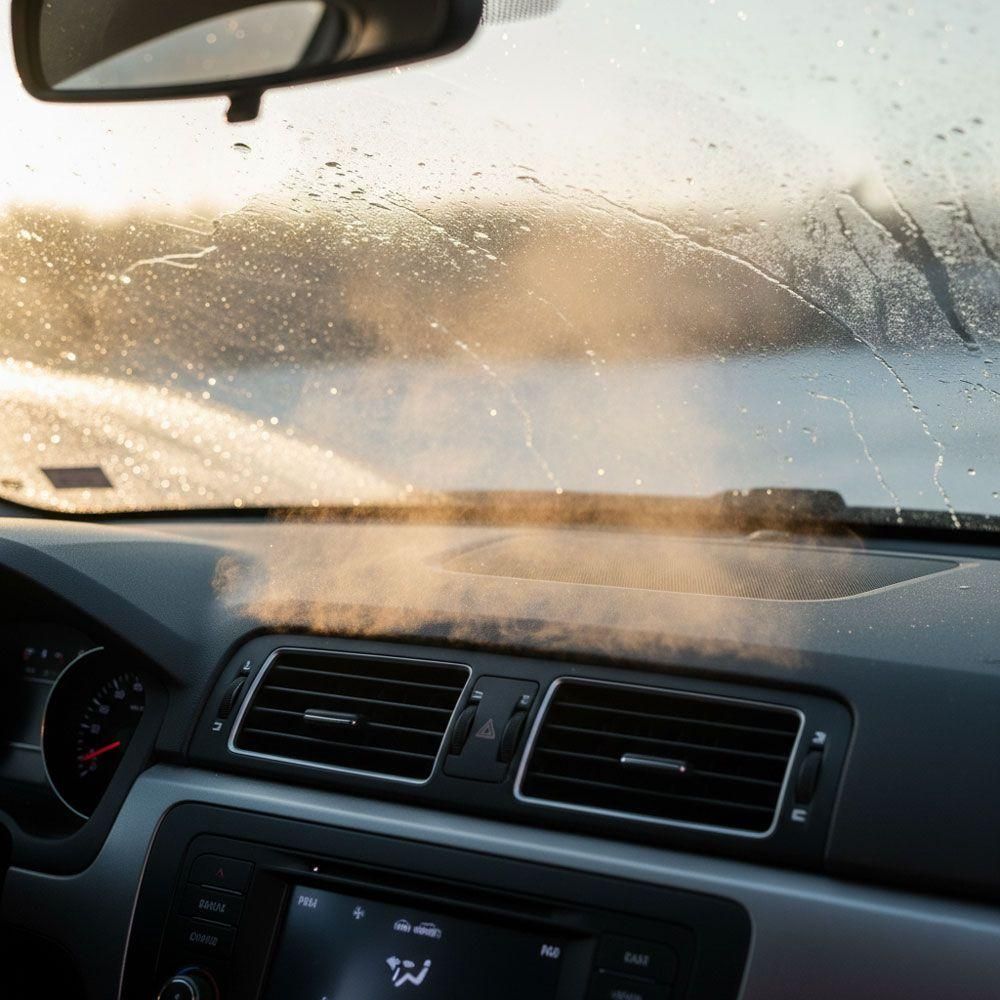
4. Why Do I Smell Oil Inside the Cabin?
Ever notice that the smell gets stronger while sitting at a red light?
Airflow around the vehicle changes when you're stopped, and odors from the engine compartment can sometimes enter the ventilation system.
Possible causes: An engine oil leak, fluid contacting hot components, or another odor source near the HVAC fresh-air intake may be involved.
Why it matters: Unusual fumes inside a vehicle deserve attention, particularly when accompanied by smoke or symptoms of exhaust intrusion.
And no, hanging another air freshener from the mirror isn't our preferred diagnostic strategy.
WHEN DO YOU NOTICE THE BURNING SMELL?
These patterns can help determine what deserves inspection, but they aren't confirmed diagnoses.
After the Engine Warms Up
Oil contacting hot engine or exhaust components is one possibility.
After an Oil Change
Spilled residue or an active service-related leak should be distinguished.
While Sitting at Stoplights
Engine-compartment odors may enter the cabin through the ventilation system.
With Visible Smoke
This deserves prompt attention and may indicate a more serious leak or overheating concern.
5. Burning Oil Smell Versus Burning Oil Internally
These are two different situations.
An external leak can drip oil onto hot components and create a smell without the engine burning oil internally.
Internal oil consumption involves oil entering the combustion process.
Depending on the cause, that may produce bluish exhaust smoke, increased oil consumption, or related symptoms.
Why it matters: The diagnostic process and possible repairs are very different.
That's why it's important to distinguish external leakage from internal oil consumption before recommending engine work.
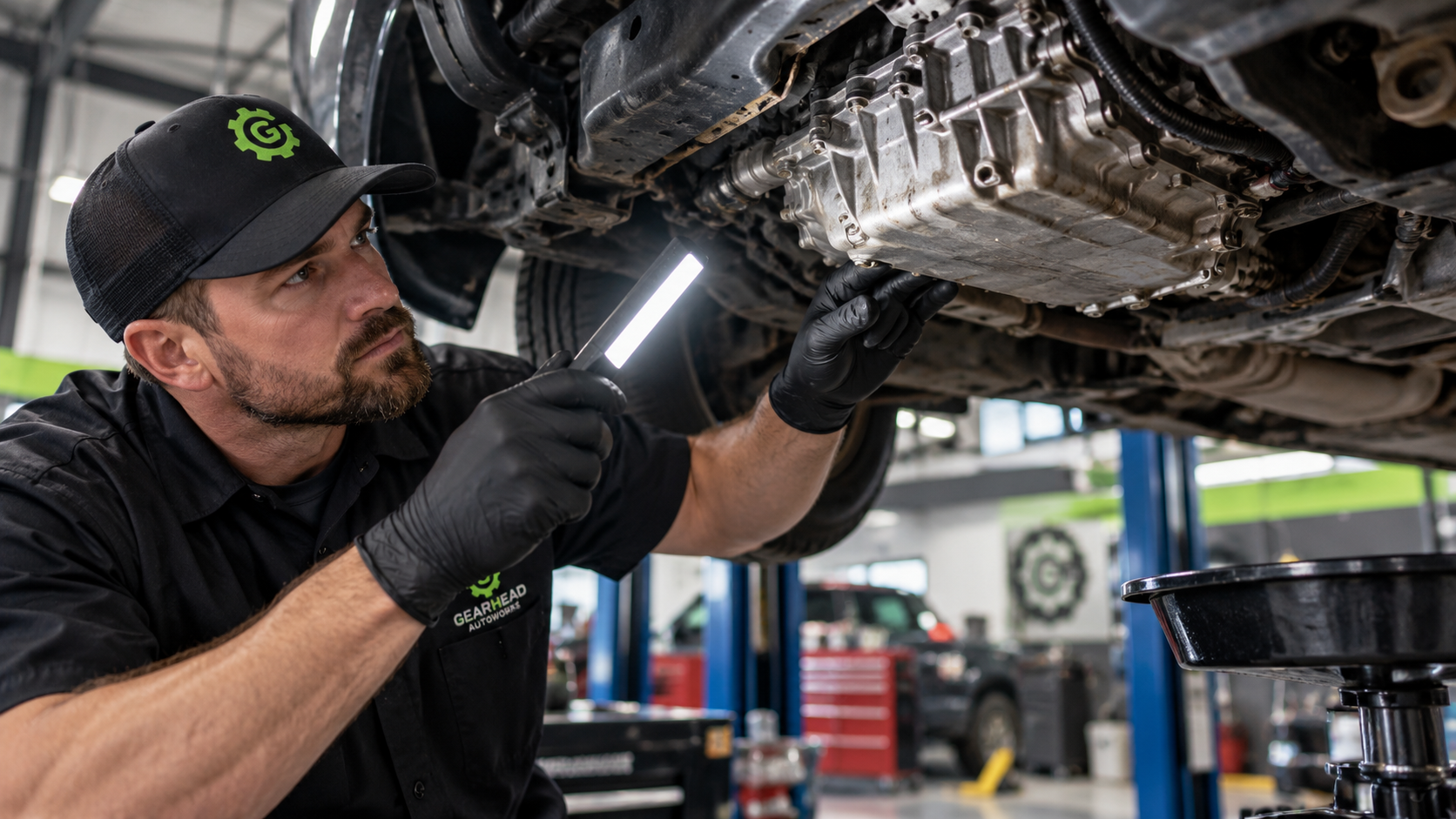
6. How Gearhead Diagnoses Oil Leaks and Burning Smells
The first goal is identifying the actual source.
Depending on the vehicle and symptoms, an inspection may include:
- Checking engine oil level and visible fluid condition.
- Identifying oil residue and potential leak paths.
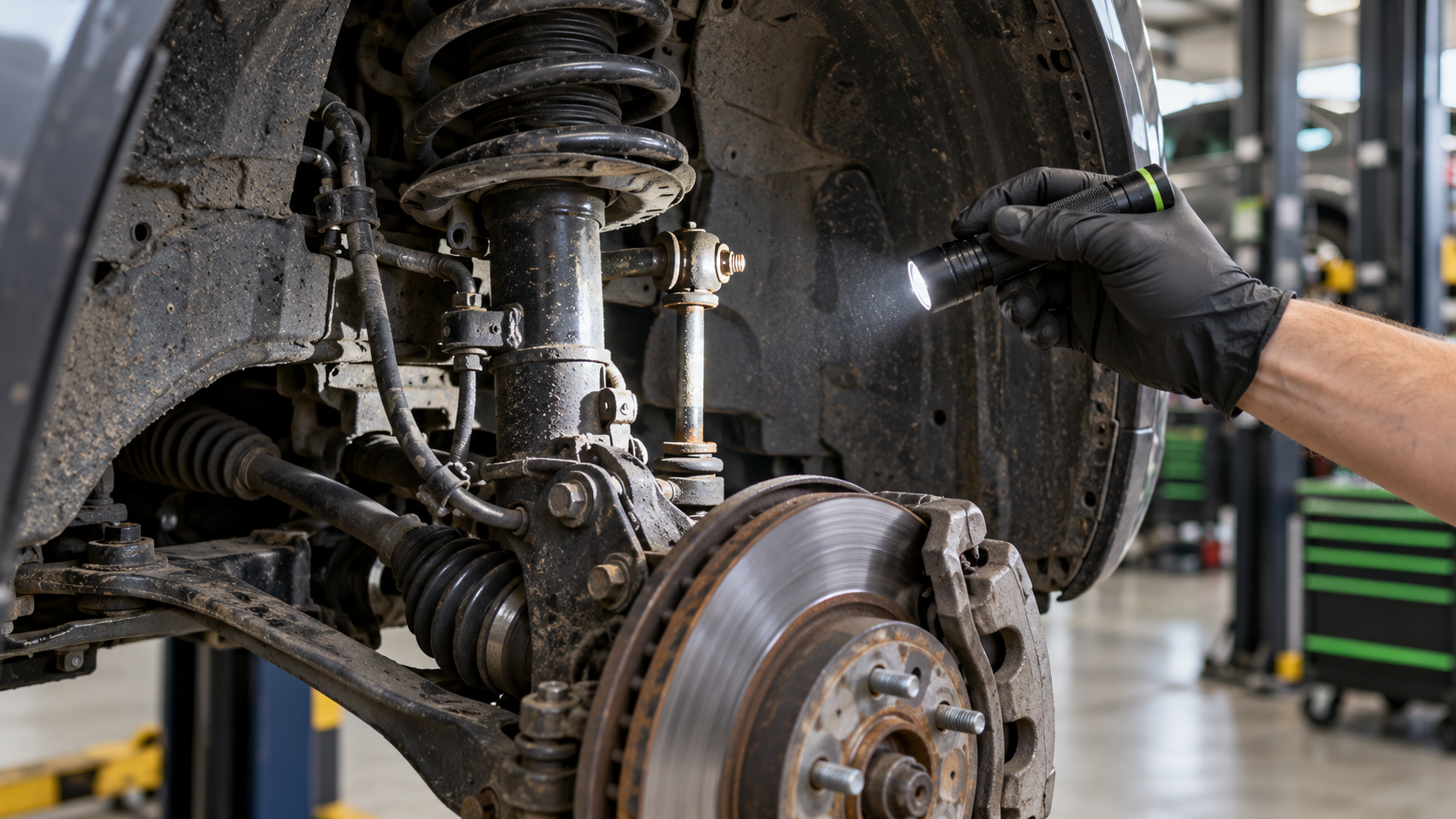
- Inspecting valve covers, oil filter housings, seals, and related components.
- Evaluating whether oil is reaching hot exhaust surfaces.
- Cleaning affected areas or using appropriate leak-detection methods.
- Determining whether the odor comes from oil or another source.
At Gearhead Autoworks, we don't want to replace three gaskets just because the bottom of the engine looks wet.
We want to identify where the problem starts.
Learn more about our engine and mechanical repair services.
7. When Should You Stop Driving?
A burning smell isn't automatically a catastrophic failure.
But there are circumstances where continuing to drive isn't worth the risk.
Never open a hot pressurized cooling system, and avoid touching hot engine or exhaust components.
If an odor is persistent but not accompanied by immediate warning signs, schedule an inspection promptly rather than waiting for it to worsen.
So, Does a Burning Oil Smell Mean Major Engine Repairs?
Not necessarily.
Sometimes the source is a relatively straightforward seal or gasket repair.
Other times, the leak may be difficult to access or connected to a larger issue.
The smell alone doesn't determine the repair cost.
What matters is finding the actual source, assessing the severity, and explaining what needs attention.
A burning smell isn't a repair estimate. It's a reason to investigate.
And we'd rather investigate now than have that smell turn into a much more expensive conversation.
Burning Oil Smell FAQs
Why does my car smell like burning oil after driving?
Engine oil leaking onto hot exhaust or engine components is one possible cause. Other fluids and overheating components can create similar smells. Inspection helps identify the source.
Can a valve cover gasket cause a burning oil smell?
Yes. A leaking valve cover gasket can allow oil to reach hot components, producing smoke or an odor. The leak should be verified before replacement.
Is a burning smell normal after an oil change?
A small amount of spilled oil may cause a temporary odor. Persistent smells, smoke, or new oil leaks should be investigated rather than dismissed.
Does smelling oil mean my engine is burning oil?
No. External oil leakage and internal oil consumption are different conditions. A smell alone cannot distinguish between them.
Where can I get an engine oil leak diagnosed near Wichita?
Gearhead Autoworks in Maize, Kansas, serves Wichita and surrounding communities with engine diagnostics, oil leak inspections, gasket repairs, and mechanical repair services.
YOUR ENGINE ISN'T SUPPOSED TO SMELL LIKE DINNER.
If you're noticing a burning oil smell, smoke, fluid leaks, or something that just doesn't seem right, let's find out what's happening.
Gearhead Autoworks provides engine diagnostics and mechanical repairs for drivers throughout Maize, Wichita, Colwich, Goddard, Valley Center, and nearby communities.
SCHEDULE YOUR VISIT