"Lifetime transmission fluid."
Sounds pretty good, doesn't it? Buy the vehicle, drive it for years, and apparently never worry about changing the transmission fluid.
There's just one question we've always found interesting: whose lifetime are we talking about?
The lifetime of the fluid? The transmission? The vehicle? Or the period the manufacturer expects the vehicle to operate under certain conditions?
The answer isn't nearly as straightforward as the label makes it sound.
At Gearhead Autoworks in Maize, Kansas, we're big believers in understanding how mechanical systems work before making maintenance recommendations.
WHAT DOES "LIFETIME FLUID" ACTUALLY MEAN?
Different manufacturers use different maintenance strategies. Some specify routine transmission fluid changes. Others call for service only under particular operating conditions.
Still others describe the transmission as filled for life under normal operation.
That wording doesn't necessarily mean the fluid remains chemically unchanged forever.
Transmission fluid experiences heat, mechanical stress, and gradual changes in condition during normal operation. Its additives and performance characteristics can change over time.
What matters is whether the fluid remains suitable for the transmission and operating conditions specified by its manufacturer.
HERE'S WHERE IT GETS INTERESTING.
ZF, a major transmission manufacturer, describes certain automatic transmissions as lifetime-filled, yet its published maintenance information also recommends an oil change after 150,000 kilometers, with earlier service potentially appropriate under high loads, high temperatures, or unknown previous operating conditions.
WHY TRANSMISSION FLUID DOES MORE THAN LUBRICATE
Automatic transmission fluid has several jobs.
It lubricates components, carries heat away from working surfaces, supports hydraulic operation, and interacts with friction components that control clutch engagement.
Modern automatic transmissions are incredibly sensitive to the characteristics of the fluid they're designed around.
That's why using the wrong fluid can create serious performance problems, even if the transmission appeared healthy beforehand.
The correct specification, level, and service procedure matter every bit as much as the decision to service it in the first place.
BUT MY TRANSMISSION DOESN'T HAVE A DIPSTICK.
Welcome to modern automotive engineering.
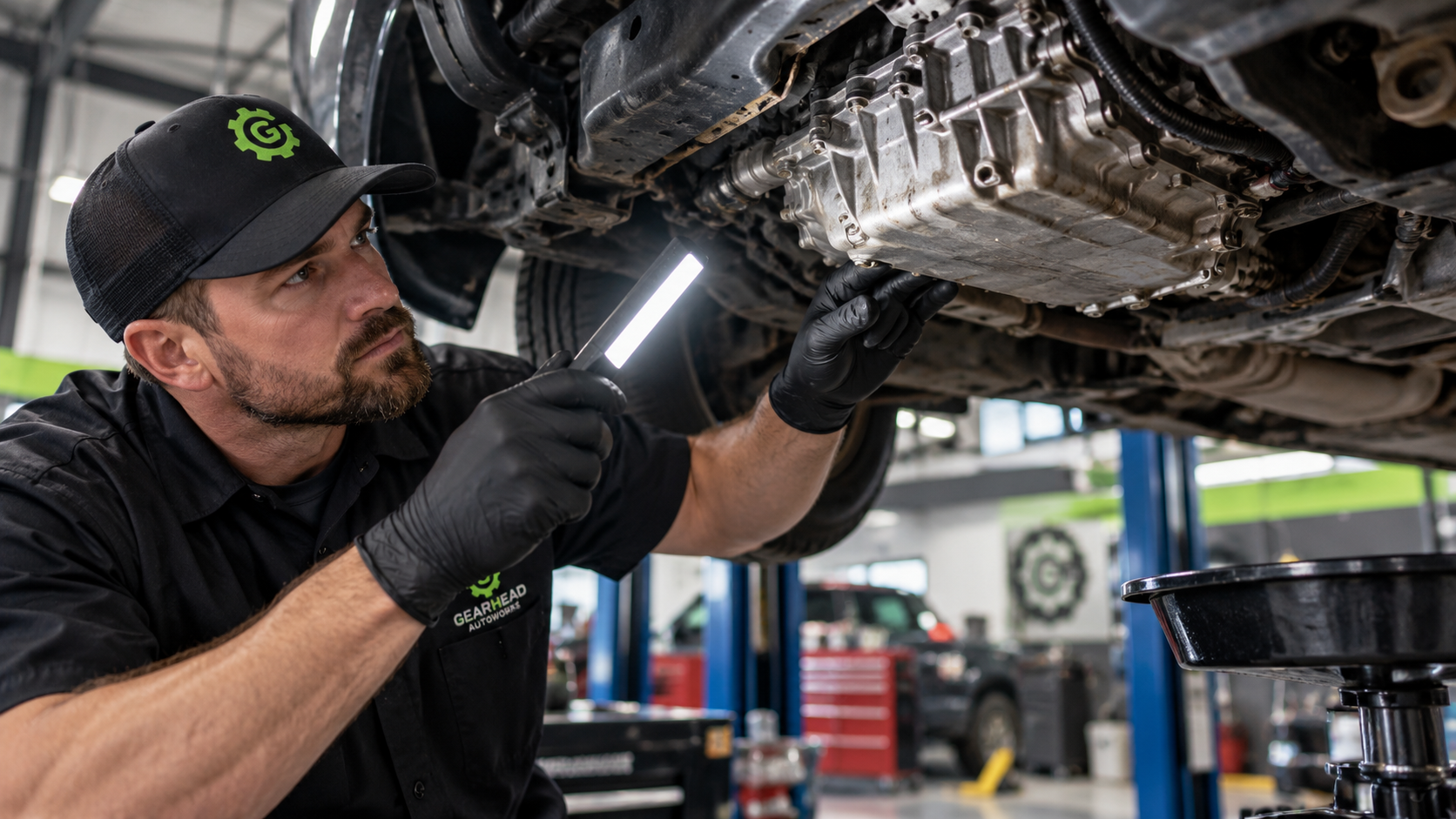
Many newer transmissions don't have a conventional dipstick for checking fluid levels in the driveway.
Some require specific fluid temperature ranges, vehicle positioning, scan-tool monitoring, and a defined filling procedure.
That doesn't automatically mean they're impossible to service.
It means the service needs to be performed correctly using the procedures for that particular transmission.
SEALED DOESN'T MEAN INVINCIBLE.
A transmission without a dipstick still contains moving parts, bearings, clutch components, seals, and fluid.
But that doesn't mean every sealed transmission needs the same service at the same mileage.
We follow the actual transmission requirements, not a universal rule from the internet.
WHAT ABOUT TRUCKS THAT TOW OR HAUL?
This is where vehicle use becomes especially important.
A pickup spending its life commuting around Wichita doesn't necessarily have the same operating demands as one regularly hauling heavy trailers across Kansas.
Load, temperature, driving conditions, and the transmission's design can influence maintenance recommendations.
Some manufacturers publish separate service schedules for severe operation.
If your truck regularly tows, hauls, idles for extended periods, or operates under demanding conditions, it's worth reviewing those requirements instead of assuming the normal-duty schedule applies.
CAN CHANGING TRANSMISSION FLUID CAUSE A TRANSMISSION TO FAIL?
You've probably heard somebody say they changed their transmission fluid and the transmission failed shortly afterward.
Those stories exist. But the timing alone doesn't tell us what caused the failure.
Sometimes the transmission was already worn or experiencing problems before the service.
Other times, incorrect fluid, improper filling, contamination, or the wrong procedure can create additional issues.
This is why we evaluate a high-mileage transmission's condition and symptoms before recommending maintenance.
Fresh fluid isn't a repair for worn-out clutch packs, damaged bearings, or internal mechanical failures.
IS A TRANSMISSION FLUSH THE SAME AS A FLUID CHANGE?
Not necessarily.
A conventional drain-and-fill removes a portion of the fluid, while some transmission service procedures also involve replacing the filter or pan assembly.
A fluid exchange can involve a different procedure and may replace a larger proportion of the fluid.
Neither term alone tells you whether the service is appropriate.
We consider the manufacturer's procedures, transmission condition, filter requirements, and fluid specifications.
Sometimes maintenance is appropriate. Sometimes the transmission needs diagnosis before anyone touches the fluid.
Learn more about our transmission diagnosis and service at Gearhead Autoworks.
NOW LET'S TALK ABOUT ELECTRIC VEHICLES.
This is probably our favorite part of the lifetime-fluid conversation.
Electric vehicles don't have conventional multi-speed automatic transmissions like most gasoline vehicles.
But many EVs still have a reduction gearbox, differential gearing, bearings, and other mechanical components inside their drive units.
Guess what those components still need?
Lubrication.
EV DRIVE UNITS STILL USE SPECIALIZED FLUIDS
Depending on the EV's design, its drive unit may contain specialized lubricant and filtration components.
Even Tesla publishes service procedures for draining and refilling gearbox fluid on applicable Model 3 drive units.
That doesn't automatically mean every Tesla needs scheduled drive-unit fluid changes.
It means the fluid is a real serviceable component under the appropriate circumstances.
Different drive-unit generations can require different lubricants and service procedures. Choosing a fluid by appearance or using a generic substitute is not an acceptable approach.
ELECTRIC DOESN'T MEAN MAINTENANCE-FREE.
EVs eliminate many familiar engine-maintenance items, but they still have mechanical drivetrains, cooling systems, suspension, brakes, tires, and other serviceable components. Maintenance needs are vehicle-specific.
Gearhead Autoworks continues to expand its diagnostic and service capabilities for electric vehicles.
Learn more on our EV service page.
SO HOW OFTEN SHOULD TRANSMISSION FLUID BE CHANGED?
There isn't a single number that applies to every vehicle.
You'll hear all kinds of recommendations: 30,000 miles, 60,000 miles, 100,000 miles, or never.
The right answer depends on the specific transmission, the manufacturer's maintenance instructions, how the vehicle is used, previous service history, and its current condition.
Factors worth reviewing include:
- The exact transmission and required fluid specification
- Normal versus severe operating conditions
- Towing and hauling history
- Current mileage and service records
- Existing shifting, noise, or drivability complaints
- Filter and filling procedure requirements
If the transmission is already slipping, banging into gear, or showing other signs of a fault, diagnostics may need to come before maintenance.
GEARHEAD'S TAKE ON LIFETIME FLUIDS
We don't believe in recommending every fluid service just because a vehicle reached a particular mileage.
We also don't believe the word "lifetime" should end every maintenance conversation.
A well-informed maintenance decision considers both the manufacturer's guidance and how the vehicle has actually been used.
That's especially important for customers who plan to keep their vehicles for a long time.
THE BOTTOM LINE?
"Lifetime" isn't permission to ignore a transmission forever.
But it also isn't permission for a shop to sell a fluid service your vehicle doesn't actually need.
Proper specifications. Proper procedures. Proper recommendations.
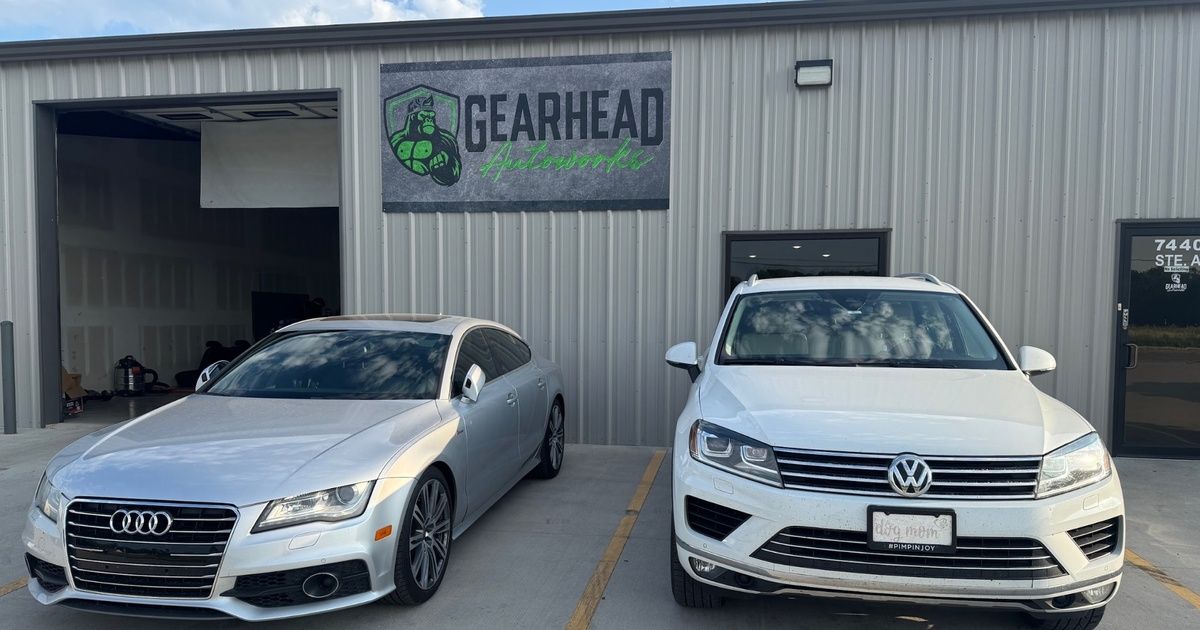
At Gearhead Autoworks in Maize, Kansas, we provide transmission diagnosis, maintenance, and replacement services for drivers throughout Wichita and nearby communities.
Whether it's a daily driver, a truck, a European vehicle, or an EV, our objective remains the same: understand the system before making a recommendation.
Explore our preventive maintenance services, transmission services, and electric vehicle services.