You're cruising down K-96, everything seems fine, and suddenly your steering wheel decides it wants to be a paint shaker.
Before we blame the alignment, let's talk about what actually makes a car shake at highway speeds.
Why Does My Steering Wheel Shake at Highway Speeds?
The short answer: Tire and wheel imbalance, irregular tire wear, wheel damage, or tire uniformity problems are common causes of vibration at highway speeds.
Steering and suspension wear can also contribute, while a vibration felt mostly during braking or acceleration may involve different systems.
What matters most: The speed where it begins, where you feel it, and whether it changes when braking or accelerating.
1. Wheel Balance: The First Place to Investigate
What you notice: A vibration that becomes noticeable within a certain speed range, often around normal highway speeds.
Possible causes: Uneven weight distribution in a tire and wheel assembly, missing wheel weights, or other wheel-and-tire problems.
Why it matters: An out-of-balance assembly can create vibration even when the tire looks perfectly normal.
Proper balancing involves measuring imbalance and correcting it rather than guessing where to stick another weight.
And yes, sometimes a simple balance correction is all the vehicle needs.
2. Road Force Balancing: When Ordinary Balancing Isn't Enough
Here's something many drivers don't realize:
A tire and wheel assembly can balance correctly and still produce an irritating vibration.
Why?
Because weight imbalance isn't the only cause of a rough ride.
Some tires have variations in stiffness or rolling characteristics that become noticeable under vehicle load.
Road Force balancing uses a loaded roller to help identify tire uniformity concerns and related vibration sources.
It can also help reveal issues that traditional spin balancing alone may not identify.
What Gearhead offers: Road Force balancing equipment and wheel-and-tire evaluation to help diagnose compatible vibration complaints.
Sometimes the solution involves repositioning the tire on the wheel to reduce road-force variation.
Sometimes a tire or wheel has a problem that balancing simply cannot correct adequately.
3. Bent Wheels and Tire Damage
What you notice: A vibration after hitting a pothole, curb, or road debris.
Possible causes: A bent rim, damaged tire, tire separation, irregular wear, or wheel runout.
Why it matters: A wheel can be out of round, or a tire can have internal damage, without an obvious problem visible from the driver's seat.
A vibration caused by physical damage won't necessarily disappear with another balance.
Wheel and tire inspection helps determine whether the assembly is suitable for continued service.
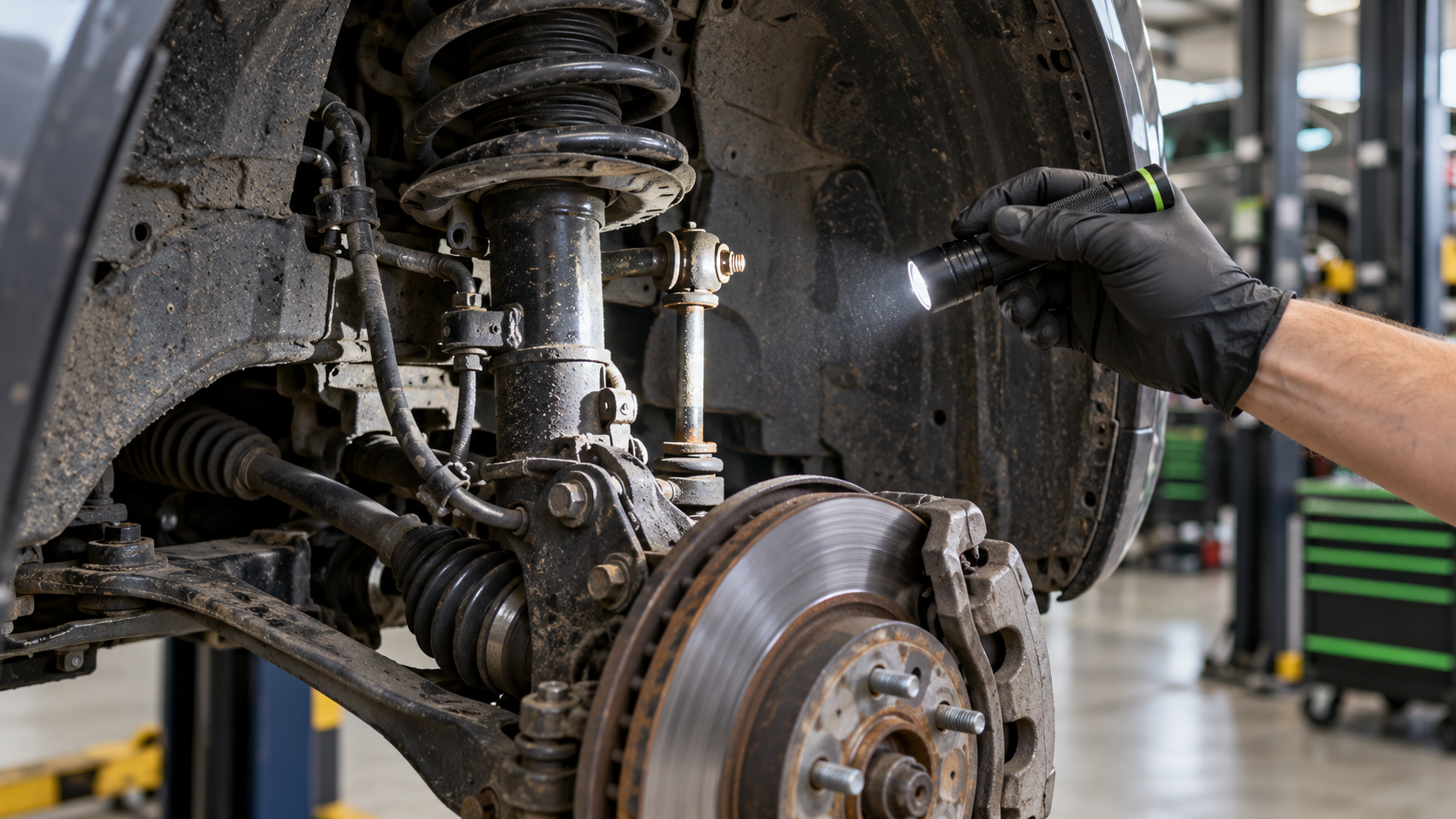
4. Steering and Suspension Wear
What you notice: Vibration combined with looseness, wandering, unusual tire wear, or clunking over bumps.
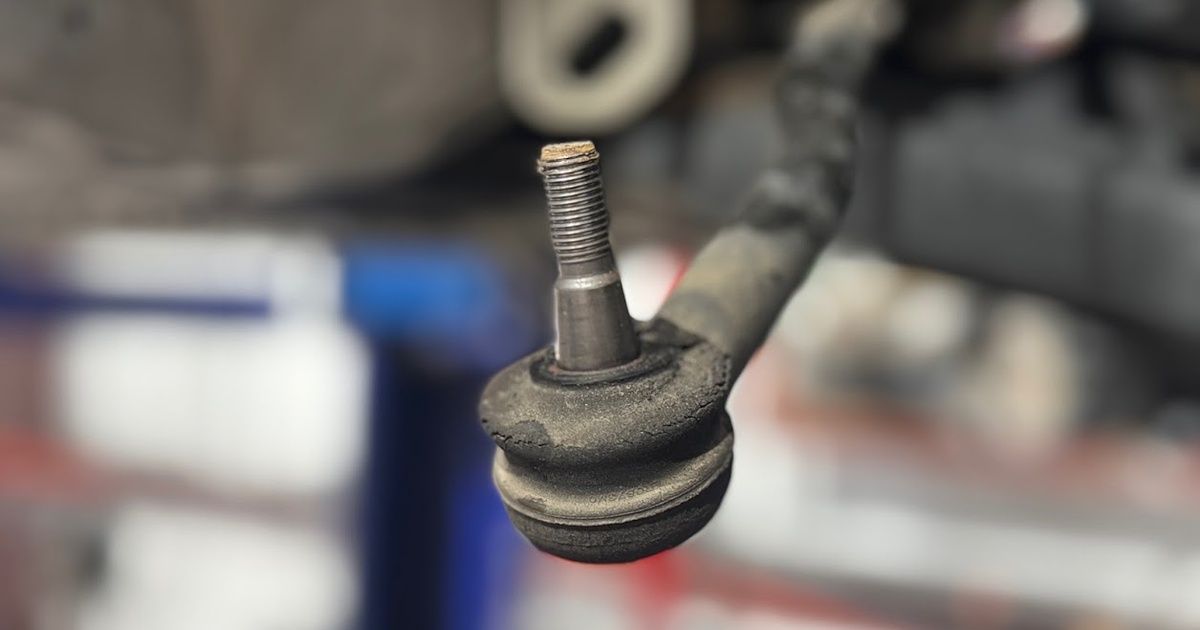
Possible causes: Worn tie rods, ball joints, control arm bushings, wheel bearings, or other steering and suspension components.
Why it matters: Mechanical looseness can allow unwanted movement and contribute to handling and vibration concerns.
But suspension parts shouldn't be replaced simply because the steering wheel shakes.
Testing and inspection determine whether a component is actually worn.
You can learn more about Gearhead's steering and suspension repair services.
WHERE DO YOU FEEL THE VIBRATION?
Different symptoms can help us decide which components deserve attention first.
Mostly in the Steering Wheel
Front tire and wheel assemblies are common starting points, but other causes are possible.
Mostly in the Seat or Floor
Rear wheel assemblies, driveline components, and other sources deserve consideration.
Only When Braking
Brake-system variation and related components may need evaluation.
Only During Acceleration
CV axles, mounts, driveshafts, and other drivetrain concerns may contribute.
These patterns provide clues, not a guaranteed diagnosis. The vehicle still needs to be inspected and tested.
5. Can a Bad Alignment Cause Highway Vibration?
This is one of the most common misconceptions we hear.
A wheel alignment is not the same thing as wheel balancing.
Wheel alignment involves the position and angles of the wheels relative to the vehicle.
Wheel balancing deals with the distribution of mass in the rotating assembly.
Alignment concerns often show up as pulling, uneven tire wear, or a steering wheel that's off-center.
Tire wear related to alignment can eventually create vibration, but adjusting alignment angles won't correct an out-of-balance tire or bent wheel.
At Gearhead Autoworks, we provide precision wheel alignments and tire balancing, so we can evaluate which service actually makes sense.
We'd rather fix the right problem than sell you the wrong service.
6. What If It Only Shakes When You Brake?
If the shaking occurs mainly while applying the brakes, the investigation changes.
Brake rotor thickness variation, runout, sticking calipers, or related problems may contribute to braking vibration.
Suspension looseness can also affect how these symptoms are felt.
The important distinction is whether the vibration occurs while cruising or specifically when slowing down.
If it happens primarily during braking, brake-system inspection may be more appropriate than immediately scheduling tire balancing.
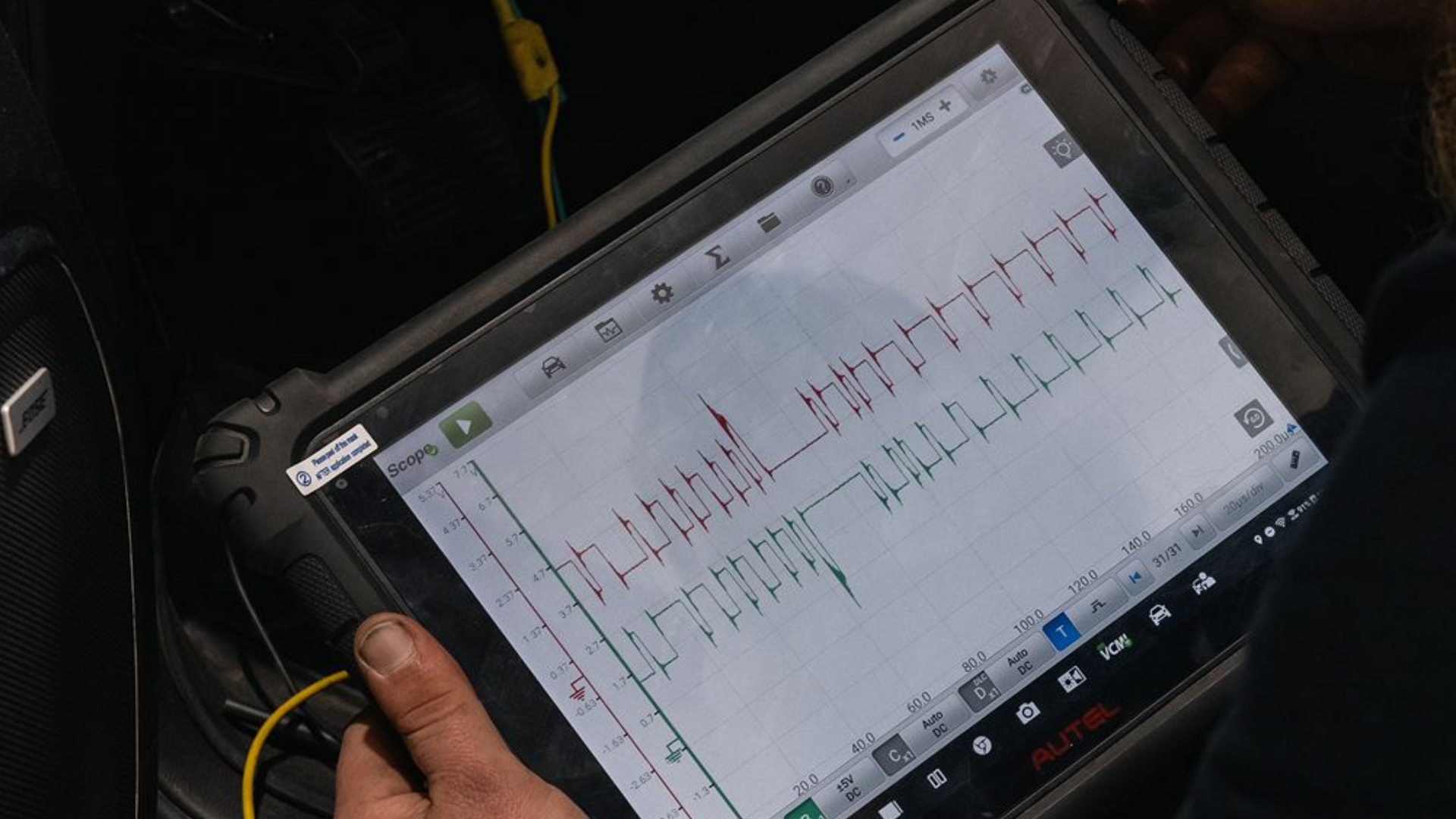
7. How We Diagnose Highway-Speed Vibration
At Gearhead Autoworks in Maize, Kansas, we start with the customer's description of the vibration.
Then, depending on the concern and vehicle condition, we may:
- Check tire condition, pressure, tread wear, and visible damage.
- Evaluate tire and wheel balance.
- Measure wheel runout and investigate tire uniformity.
- Use Road Force balancing when appropriate.
- Inspect steering, suspension, wheel bearings, and related components.
- Consider brake or drivetrain concerns when the symptoms point elsewhere.
- Verify the repair through appropriate testing when safe.
Our goal isn't to sell everybody an alignment, new tires, and four suspension components.
It's to determine why the vehicle shakes and address what actually causes it.
8. Is a Highway-Speed Vibration Dangerous?
That depends on what's causing it.
A minor imbalance may primarily affect ride comfort.
But a damaged tire, loose wheel, failing wheel bearing, or severely worn steering component can create a serious safety concern.
So, Does Your Car Actually Need Balancing?
Maybe!
Tire and wheel imbalance is a common reason for speed-related vibration.
But bent wheels, tire damage, suspension wear, or drivetrain problems can create similar complaints.
The correct repair depends on the source of the vibration.
And if you've already balanced the tires three times and the car still shakes?
Maybe it's time to investigate something other than the wheel weights.
That's where a proper inspection and Road Force evaluation can be useful.
Highway Vibration FAQs
Why does my steering wheel shake at 60–70 MPH?
Tire and wheel imbalance, wheel damage, tire uniformity problems, and steering or suspension issues are possible causes. Inspection and testing help distinguish them.
Can a tire be balanced and still vibrate?
Yes. Tire stiffness variation, wheel runout, damage, or other conditions may produce vibration despite acceptable conventional balance measurements. Road Force testing can help identify certain problems.
Will a wheel alignment fix my steering wheel shaking?
Not necessarily. Wheel alignment addresses wheel angles, while balancing addresses mass distribution. The cause should be identified before selecting a service.
Why does my car shake only when braking?
Brake rotor thickness variation, runout, caliper problems, and related concerns may contribute. Brake-system and suspension inspection can help identify the actual cause.
Where can I get Road Force balancing near Wichita?
Gearhead Autoworks in Maize, Kansas, serves northwest Wichita with tire installation, balancing, Road Force evaluation, and related automotive repair services.
YOUR STEERING WHEEL ISN'T SUPPOSED TO HAVE A VIBRATION SETTING.
If your vehicle shakes at highway speeds, let's find out whether it's the tires, wheels, suspension, or something else.
Gearhead Autoworks serves Maize, Wichita, Colwich, Goddard, Valley Center, and surrounding communities.
SCHEDULE YOUR VISIT