Why Is My Check Engine Light On If My Car Drives Fine?
Gearhead Autoworks
October 8, 2026
You're driving down the road, everything feels normal, and suddenly that little orange engine symbol lights up on your dashboard.
No strange noises. No shaking. No noticeable loss of power.
So what's the deal? If your car seems to be running perfectly fine, why is the check engine light on?
It's one of the most common questions we hear at Gearhead Autoworks in Maize, KS, and the answer isn't always as straightforward as you might think.
The short version? Your vehicle can detect a problem long before you can feel one.
Why Your Check Engine Light Comes On
Modern vehicles constantly monitor dozens of systems, including engine performance, fuel delivery, emissions, ignition, and electrical components.
When the vehicle's computer detects something outside its expected operating range, it may store a diagnostic trouble code (DTC) and illuminate the check engine light.
That doesn't necessarily mean your engine is about to fail. It does mean the computer has detected something that deserves attention.
And here's where things get interesting: A trouble code doesn't automatically tell you which part needs replacing.
For example, a code related to an oxygen sensor might be caused by the sensor itself, but it could also be the result of an exhaust leak, wiring issue, fuel delivery problem, or another condition affecting the sensor's readings.
Replacing the part mentioned in the code without testing the system can get expensive in a hurry.
5 Reasons Your Check Engine Light May Be On Without Symptoms
1. A Loose Gas Cap or EVAP System Problem
Your vehicle's evaporative emissions (EVAP) system helps prevent fuel vapors from escaping into the atmosphere.
A loose or damaged gas cap can trigger a warning on some vehicles. So can a leaking EVAP hose, purge valve issue, or other system fault.
You might never notice a difference in how the car drives.
2. Oxygen Sensor or Fuel Mixture Problems
Oxygen sensors help the engine computer monitor exhaust oxygen levels and adjust fuel delivery.
When readings fall outside the expected range, the check engine light may illuminate even though the engine still feels normal.
The important part is determining why those readings are abnormal, rather than assuming the sensor has failed.
3. Early Ignition or Misfire Problems
Spark plugs, ignition coils, fuel injectors, and other components can develop problems before a driver notices obvious symptoms.
Some vehicles can detect intermittent misfires that are difficult to feel from behind the wheel.
Left unresolved, certain misfires can damage the catalytic converter and turn a smaller repair into a much more expensive one.
4. Thermostat or Engine Temperature Issues
Your engine needs to reach and maintain the proper operating temperature.
A thermostat that isn't functioning correctly can sometimes trigger a check engine light without causing overheating or obvious drivability problems.
That doesn't make it something to ignore. Engine temperature affects efficiency, emissions, and long-term performance.
5. Electrical or Sensor Circuit Faults
Modern vehicles rely on sensors, modules, wiring, and communication networks to operate properly.
A damaged connector, intermittent wiring fault, or unexpected sensor reading can set a code without producing any noticeable symptoms.
This is one reason proper electrical diagnostics matter. The problem isn't always the component that appears in the fault code.
Steady vs. Flashing Check Engine Light: What's the Difference?
Not all check engine light warnings carry the same urgency.
Steady Check Engine Light
A steady light generally means the vehicle has detected a fault that needs diagnosis.
If the vehicle is operating normally and there are no other warning signs, it may be possible to drive a short distance to arrange service. However, the light alone cannot establish whether continued driving is safe.
If you notice overheating, rough running, unusual noises, loss of power, or other warning lights, stop driving when it's safe to do so.
Flashing Check Engine Light
A flashing check engine light is a different story.
It commonly indicates a severe misfire that may damage the catalytic converter.
If your check engine light begins flashing, reduce power, pull over safely, shut the engine off, and arrange professional assistance. Don't continue driving simply because the vehicle still moves.
Why a Free Code Scan Isn't the Same as a Diagnosis
Many auto parts stores offer free trouble-code scans, and there's nothing wrong with using one to gather information.
But reading a code and diagnosing a problem are two very different things.
Think of a trouble code as a starting point.
A code might indicate that an engine is running lean. It doesn't tell you whether the cause is unmetered air entering the engine, inadequate fuel delivery, an exhaust leak, or an electrical issue.
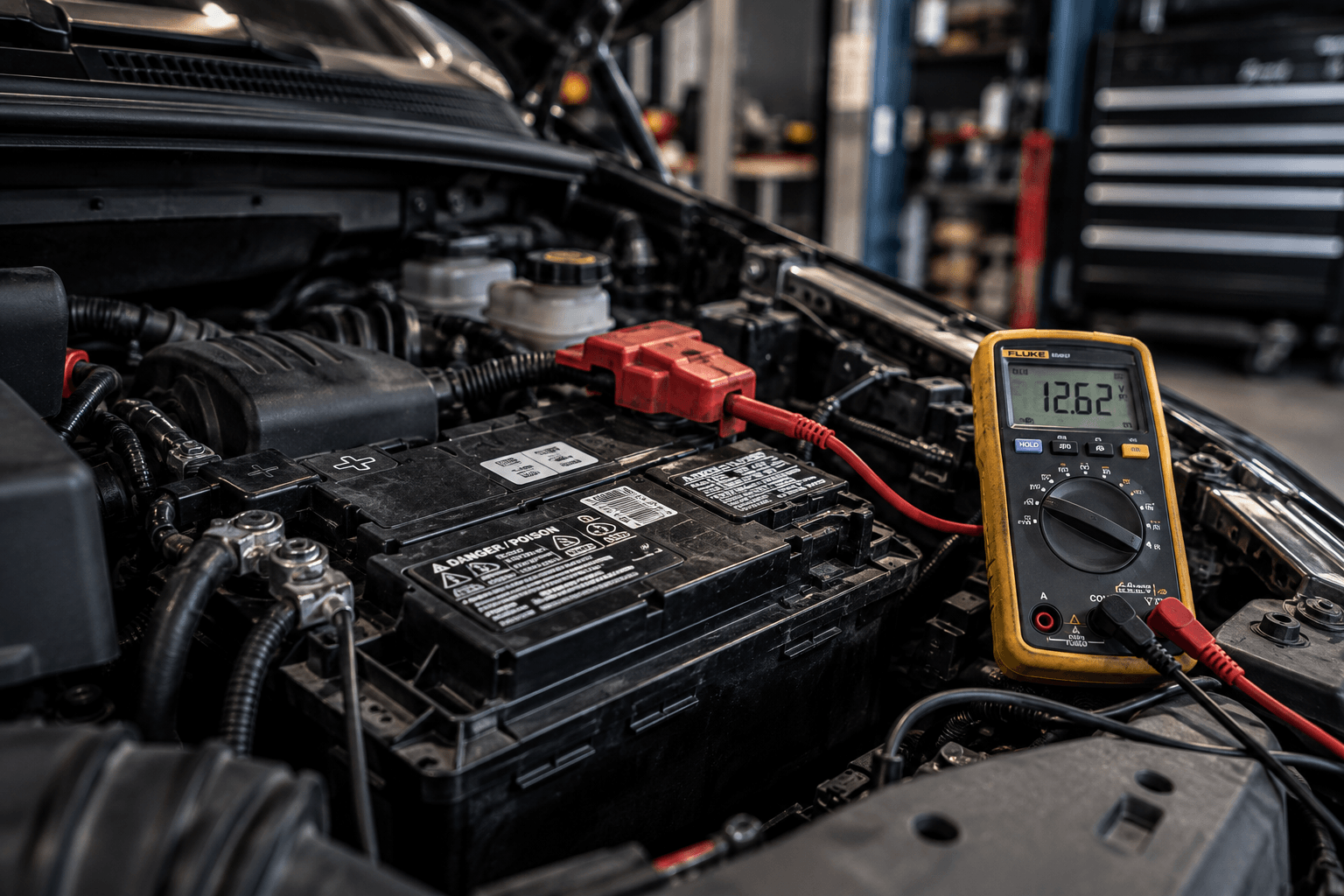
Proper diagnosis may require reviewing live sensor data, checking technical service information, testing electrical circuits, measuring fuel pressure, or performing other system-specific tests.
The goal isn't to guess which part might fix the problem. It's to determine what's actually causing it.
How Gearhead Autoworks Diagnoses Check Engine Lights
At Gearhead Autoworks, we approach check engine light concerns through our Root Cause Analysis process.
Rather than immediately recommending a part based on a stored code, we investigate the system involved and perform the testing needed to identify the underlying problem.
Depending on the vehicle and symptoms, that may involve:
- Retrieving stored, pending, and historical diagnostic trouble codes.
- Reviewing freeze-frame information and live vehicle data.
- Inspecting relevant components, wiring, and connections.
- Performing targeted electrical, mechanical, or system tests.
- Explaining our findings and recommending the appropriate next steps.
We work on domestic, Asian, and European vehicles, including modern vehicles with complex electronic systems.
Our philosophy is straightforward:
We find the source. Then we fix it right.
Learn more about our Diagnostics & Electrical Repair services.
Can I Just Clear the Check Engine Light?
You can clear many diagnostic trouble codes with a scan tool, but clearing a code doesn't repair the condition that caused it.
If the problem remains, the light may return once the vehicle's computer detects the fault again.
Clearing codes can also erase valuable diagnostic information and reset emissions readiness monitors, making the problem harder to evaluate and potentially affecting emissions testing where required.
Before clearing anything, it's usually better to understand why the light came on in the first place.
Check Engine Light Diagnosis Near Wichita, KS
If your check engine light is on, even if your car seems to drive normally, don't wait for a small problem to become a bigger one.
Gearhead Autoworks is located in Maize, Kansas, serving drivers throughout Wichita, Goddard, Colwich, Bentley, and surrounding communities.
Whether you're dealing with an intermittent warning, an emissions-related fault, or a vehicle that simply doesn't feel right, we're here to help you get answers.
You can also learn more about our Vehicle Inspections if you're looking for a broader picture of your vehicle's condition.
Ready to find out why that light is on?
Schedule an appointment with Gearhead Autoworks or call (316) 619-8721.
No parts darts. No unnecessary guessing. Just a professional approach to finding the problem and getting you back on the road.