You're cruising down the highway, everything feels great, and then you hit about 65 MPH. Suddenly, your truck starts shaking like something's trying to escape.
Slow down a little? Smooth as can be. Speed back up? There it is again.
Naturally, the first thought is usually "My tires need balanced."
And sometimes that's exactly right. But we've seen enough steering, suspension, tire, and drivetrain issues to know that replacing or balancing tires isn't always the answer.
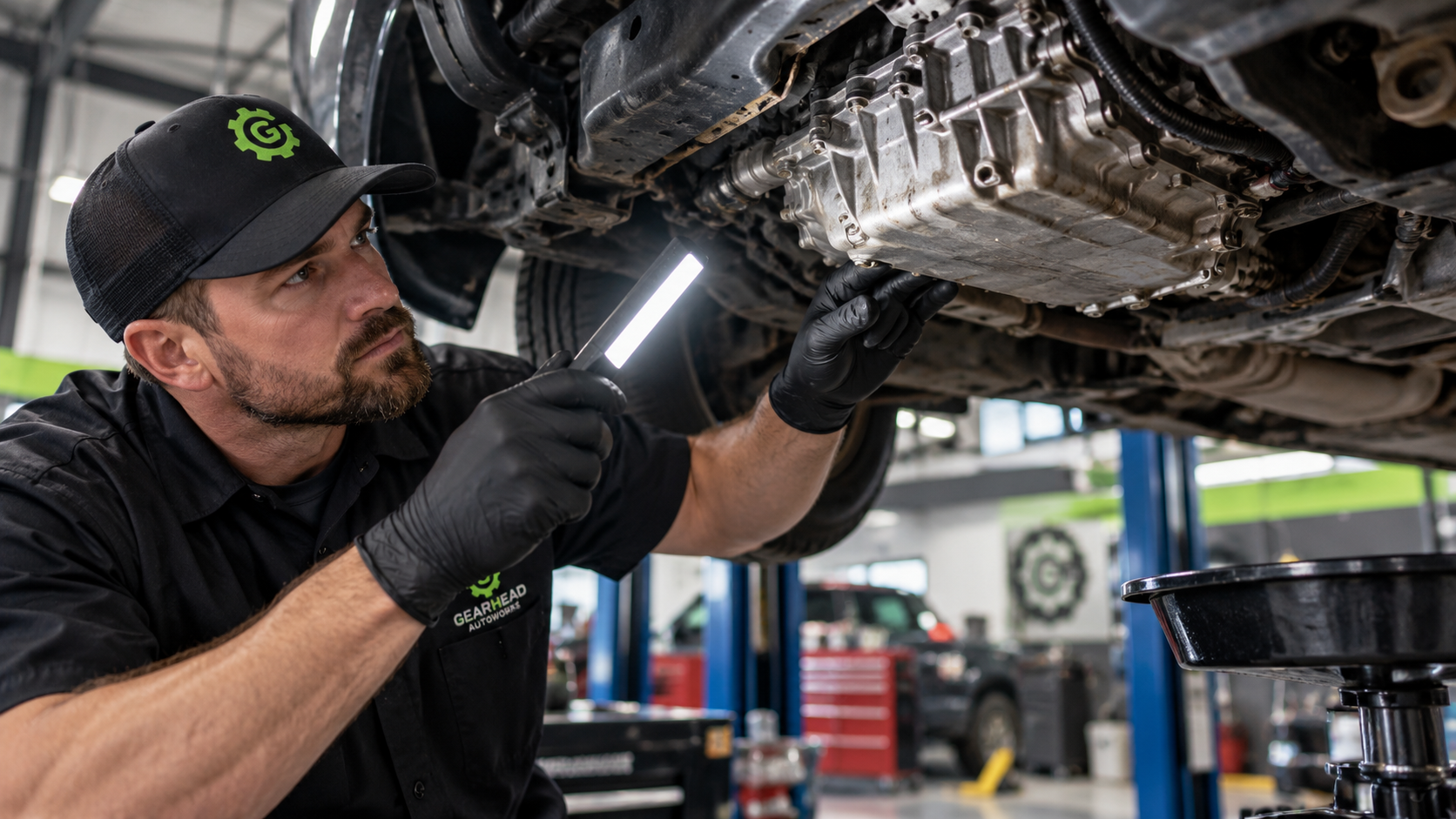
At Gearhead Autoworks, we're interested in why the truck is shaking, not just which part we can replace first.
FIRST, WHERE DO YOU FEEL THE VIBRATION?
One of the first questions we'd ask is where you're actually feeling the shake.
In the Steering Wheel?
A steering-wheel vibration often points us toward the front wheel and tire assemblies or steering and suspension components.
That doesn't automatically confirm a tire balance issue, but it helps establish where to begin.
In the Seat or Floor?
A vibration felt through the seat, floor, or body may lead us to inspect rear wheel and tire assemblies, driveline components, or other rotating parts.
Only While Accelerating?
Now we're looking at a different pattern. A vibration that changes significantly with throttle input may involve driveline operating angles, U-joints, CV joints, engine or transmission mounts, or other load-sensitive components.
PAY ATTENTION TO THE PATTERN.
Does the shake follow vehicle speed, engine RPM, braking, or acceleration? Those details help narrow down the cause before anyone starts throwing parts at the truck.
CAUSE #1: WHEEL AND TIRE BALANCE
This is one of the most common places to start when a truck develops a speed-related vibration.
As a tire and wheel assembly rotates, variations in weight distribution can create vibration. Balancing corrects that imbalance by applying weight in the appropriate locations.
But there's a catch.
A tire can be properly balanced and still cause a vibration.
That's where things get interesting.
CAUSE #2: ROAD FORCE VARIATION
Not every tire is perfectly uniform, even when it's brand new.
One section of a tire may be stiffer than another, or there may be differences in how the assembly rolls under load.
A conventional balance measurement may look fine while the truck still shakes going down the road.
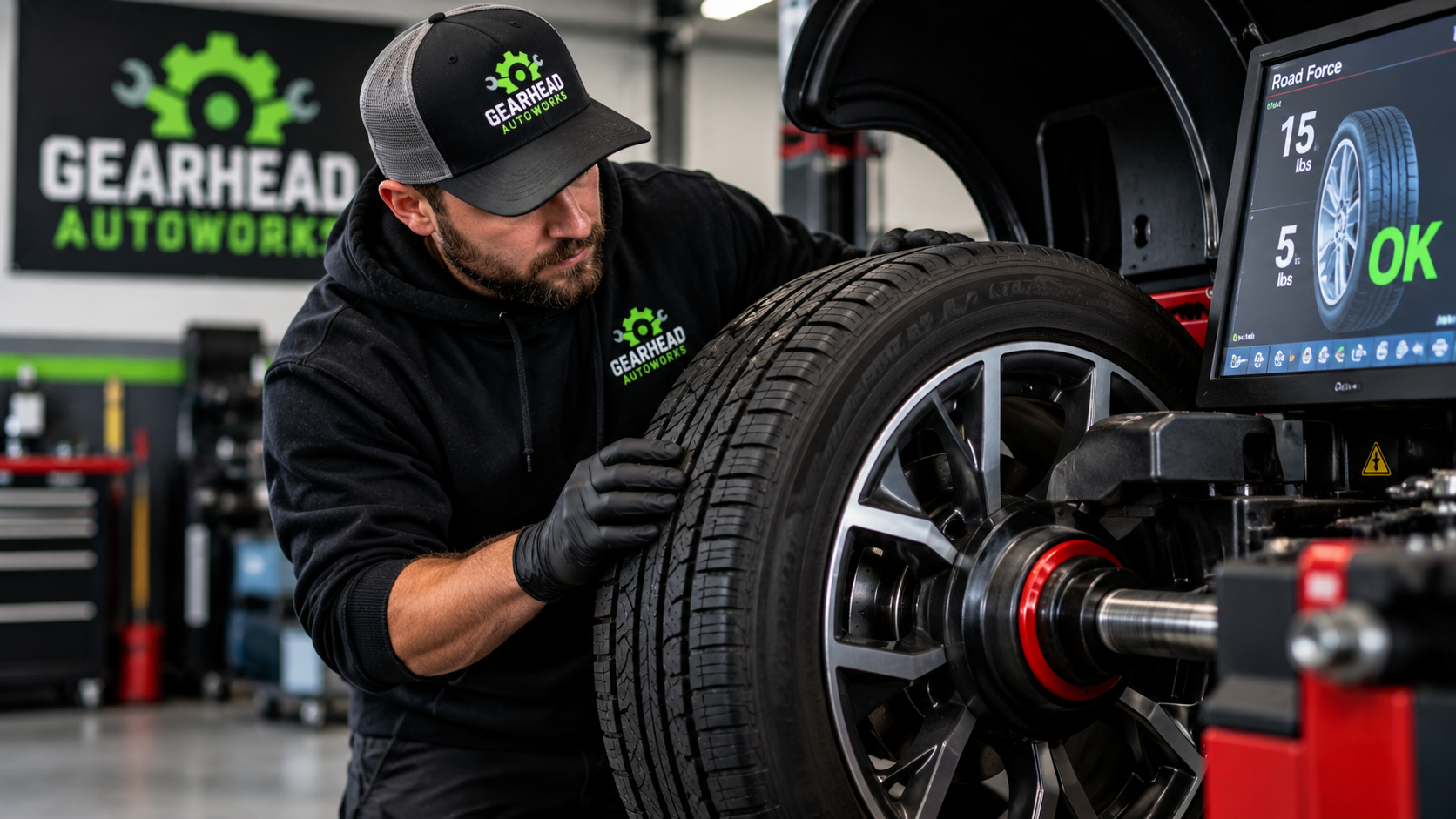
This is where our Hunter Road Force balancing equipment can be particularly useful. It applies a simulated load against the tire and measures characteristics that conventional balancing alone may not reveal.
Depending on the findings, a technician may be able to improve the assembly by repositioning the tire on the wheel. In other cases, the tire or wheel itself may need attention.
Road Force testing isn't magic, and it doesn't diagnose every possible vibration. But it gives us another piece of useful evidence.
CAUSE #3: BENT WHEELS AND DAMAGED TIRES
Kansas roads are not always particularly gentle on wheels.
Potholes, road debris, and impacts can bend a wheel or damage a tire without immediately causing a flat.
You might have an out-of-round wheel, a tire with irregular wear, or internal tire damage.
Some of these conditions can cause a vibration that no amount of balancing will fix.
A proper inspection should consider tire condition, wheel runout, damage, and mounting condition.
CAUSE #4: STEERING AND SUSPENSION WEAR
A pickup truck's steering and suspension deal with substantial weight, road impacts, towing loads, and years of use.
Worn tie rods, ball joints, bushings, bearings, and other components can allow movement that shouldn't be there.
Some faults cause looseness or instability rather than a simple rhythmic vibration. Others can make an existing tire problem feel much worse.
That's why we inspect the relevant components before assuming another balance is all that's needed.
Learn more about our truck service and repair capabilities in Maize and Wichita.
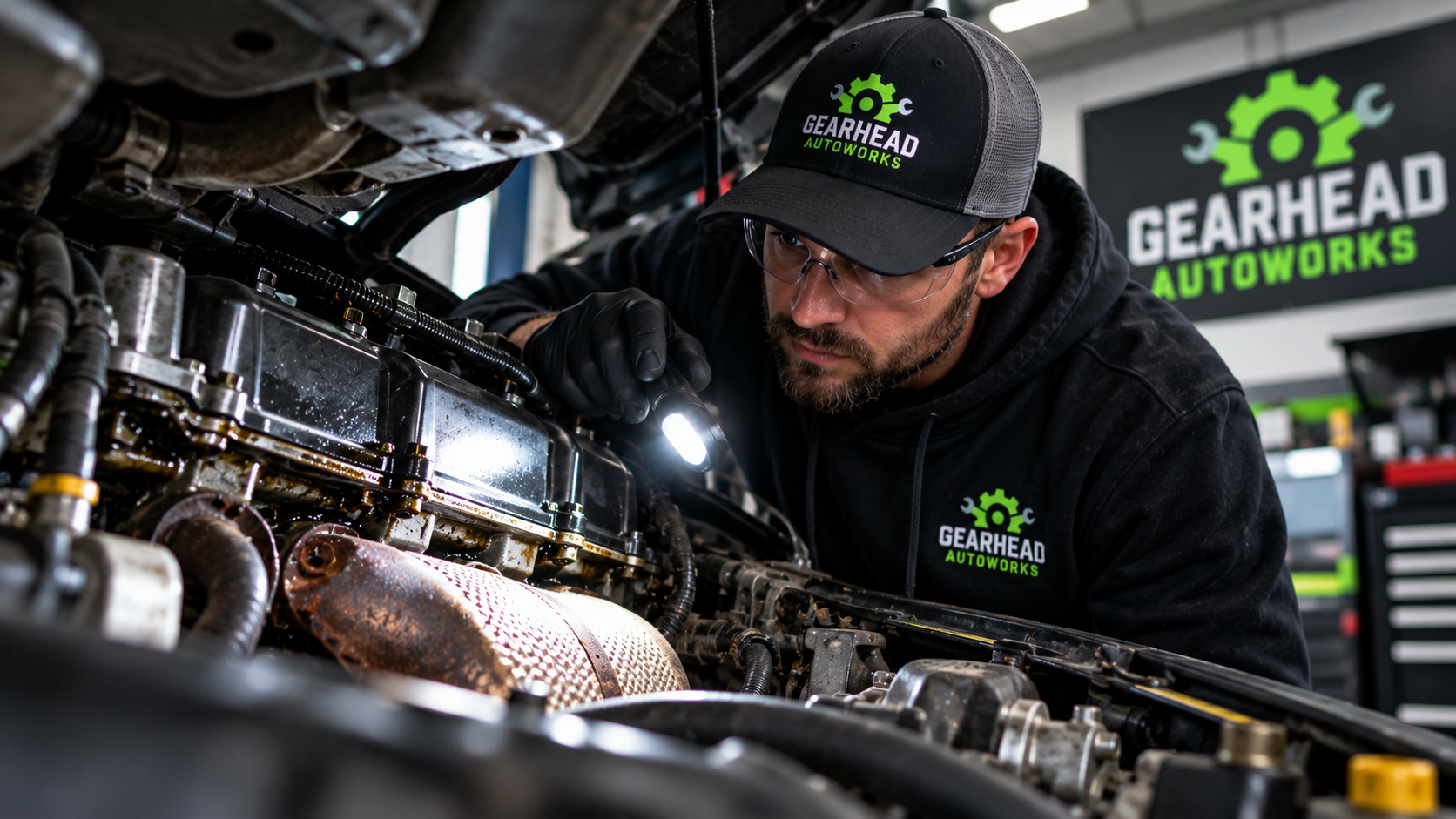
CAUSE #5: DRIVESHAFT AND DRIVELINE PROBLEMS
Four-wheel-drive pickups have more than a few rotating components underneath.
Depending on the truck, a driveline vibration can involve U-joints, driveshaft condition, operating angles, CV components, or related rotating assemblies.
Some vibrations change with acceleration or deceleration. Others follow road speed more consistently.
These complaints require actual diagnosis, especially when tire and wheel testing doesn't explain the symptom.
WE'VE BALANCED THE TIRES THREE TIMES. IT STILL SHAKES.
Sound familiar?
If repeated balancing hasn't corrected the problem, repeating the exact same procedure without looking further probably isn't the best use of your money.
It may be time to inspect tire uniformity, wheel runout, steering components, and drivetrain operation.
A successful repair starts with identifying the cause, not repeating a guess.
WHAT IF MY TRUCK ONLY SHAKES WHEN I HIT THE BRAKES?
That's another important distinction.
A vibration that happens primarily during braking can involve brake rotor thickness variation, brake system issues, or worn chassis components.
The sensation may be felt through the brake pedal, steering wheel, or vehicle body.
If the shake only happens while braking, a tire balance may have nothing to do with it.
Our brake repair services include evaluating the components responsible for safe, predictable braking.
WILL A WHEEL ALIGNMENT FIX A HIGHWAY VIBRATION?
This is a question we hear often.
A wheel alignment adjusts the vehicle's suspension geometry to the proper specifications. It's important for tire wear, steering behavior, and vehicle tracking.
However, an alignment generally does not correct a tire imbalance, bent wheel, or defective driveshaft.
If your truck pulls to one side, has an off-center steering wheel, or shows irregular tire wear, an alignment inspection may be appropriate.
But when the complaint is a vibration at 65 MPH, we need to find what is actually causing that vibration.
You can learn more about our wheel alignment services and when alignment is the right repair.
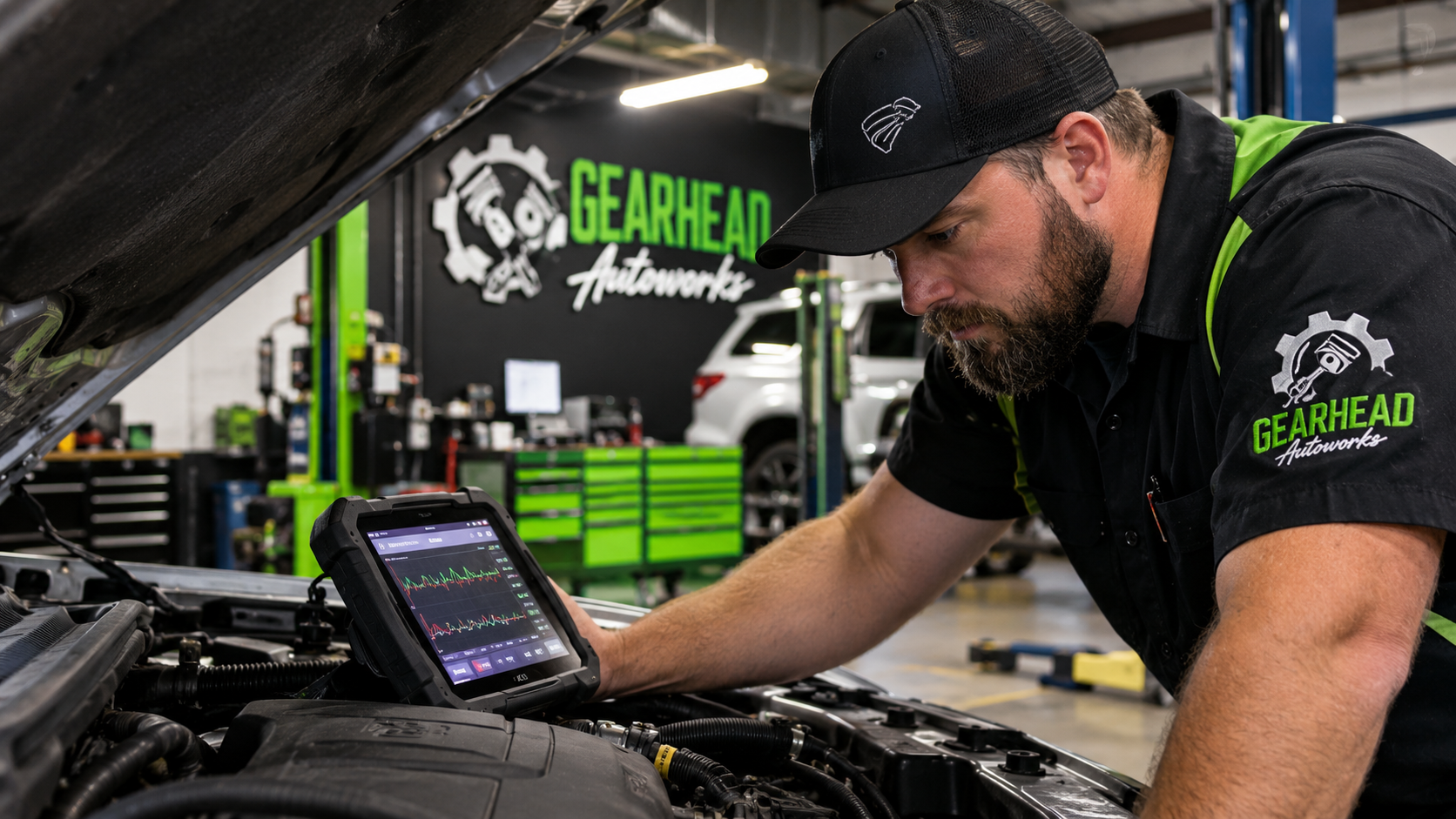
HOW DOES GEARHEAD TRACK DOWN A TRUCK VIBRATION?
We start by understanding exactly what's happening.
Is it noticeable at 45 MPH or only at highway speeds? Does it change under acceleration? Was there a recent tire installation, suspension repair, or impact?
Depending on the complaint, our diagnostic approach may include:
- Tire condition and wear inspection
- Wheel balance and Road Force testing
- Wheel and tire runout evaluation
- Steering, suspension, and bearing inspection
- Driveshaft and driveline assessment
- A controlled road test when safe and appropriate
We don't necessarily perform every test on every truck. The complaint and initial findings tell us where the investigation should go.
IS IT SAFE TO KEEP DRIVING WITH A VIBRATION?
That depends on the cause, which is exactly why an unexplained vibration shouldn't be ignored.
A minor imbalance and a severely damaged tire can feel similar to a driver, but the risks are very different.
If the shaking is severe, suddenly worsening, or accompanied by steering looseness, tire damage, or unusual noises, avoid highway driving and arrange an inspection. If you suspect a loose wheel or serious mechanical failure, stop driving and arrange a tow.
STOP CHASING THE SHAKE.
A truck that vibrates at highway speeds doesn't automatically need tires, balancing, or an alignment. It needs the correct problem identified first.
At Gearhead Autoworks in Maize, we help Wichita-area truck owners investigate vibrations, steering concerns, tire problems, and drivetrain issues.
Whether your pickup is a Ford, Chevrolet, GMC, Ram, Toyota, or Nissan, the goal is the same: find the source, then fix it right.
Explore our truck repair services, wheel alignment services, and brake repair services.