Why Does My Car Shake at Highway Speeds?
Gearhead Autoworks
October 5, 2026
A vibration that barely exists around town can become impossible to ignore once you reach 60 or 70 mph.
Maybe the steering wheel starts shaking. Maybe you feel it through the seat or floor. Maybe the entire vehicle develops a vibration that disappears again when you slow down.
It's tempting to immediately blame the alignment.
But a highway-speed vibration isn't automatically an alignment problem.
Where you feel the vibration, when it happens and what changes it can all provide clues about what's actually going on.
Tire Balance Is a Common Place to Start
A wheel and tire assembly isn't perfectly uniform.
Small differences in weight can create a vibration as the tire rotates, and the faster it spins, the more noticeable that imbalance can become.
A balance-related vibration often becomes most noticeable within a particular speed range. You may barely notice anything at 35 mph but feel a definite shake once you're traveling at highway speed.
Proper balancing measures the wheel and tire assembly and determines where corrective weight is needed.
But balance isn't the only tire-related possibility.
A Balanced Tire Can Still Cause a Vibration
This is where simply adding wheel weights doesn't always solve the problem.
A tire can have:
- Uneven wear
- Internal damage
- A shifted or damaged belt
- Excessive radial or lateral runout
- Flat spotting
- An out-of-round condition
- Irregular stiffness within the tire itself
A wheel can also be bent or damaged.
That means a wheel-and-tire assembly can technically balance on a machine while still creating a vibration on the road.
Gearhead Autoworks uses Road Force balancing, which allows us to evaluate more than simple weight imbalance and can help identify tire and wheel conditions that a conventional spin balance may miss.
Where Do You Feel the Vibration?
This isn't a perfect diagnostic rule, but it's useful information.
A vibration that's especially noticeable through the steering wheel may point our attention toward the front of the vehicle.
A vibration felt more strongly through the seat or floor may lead us to investigate the rear tires, wheels or other rotating components.
But we don't diagnose a vehicle based on that observation alone.
It's a clue.
And clues help us decide what to test next.
Does It Shake Only When You Brake?
That's a different conversation.
If the vehicle is smooth at highway speed until you apply the brakes, the braking system deserves attention.
Brake-related vibration can come from conditions involving the rotors, hubs, calipers, suspension components or other parts of the system.
The important distinction is when the vibration occurs.
If it consistently begins or becomes dramatically worse while braking, simply balancing the tires may accomplish absolutely nothing.
Does It Vibrate Under Acceleration?
A vibration that changes with throttle can point us in another direction.
Depending on the vehicle, possibilities can include:
- CV axles
- Driveshafts
- U-joints
- Engine or transmission mounts
- Driveline angles
- Other rotating driveline components
A vibration that occurs at 65 mph regardless of throttle isn't necessarily the same problem as one that appears specifically while accelerating from 50 to 70 mph.
Again, when it happens matters.
What About Wheel Bearings and Suspension?
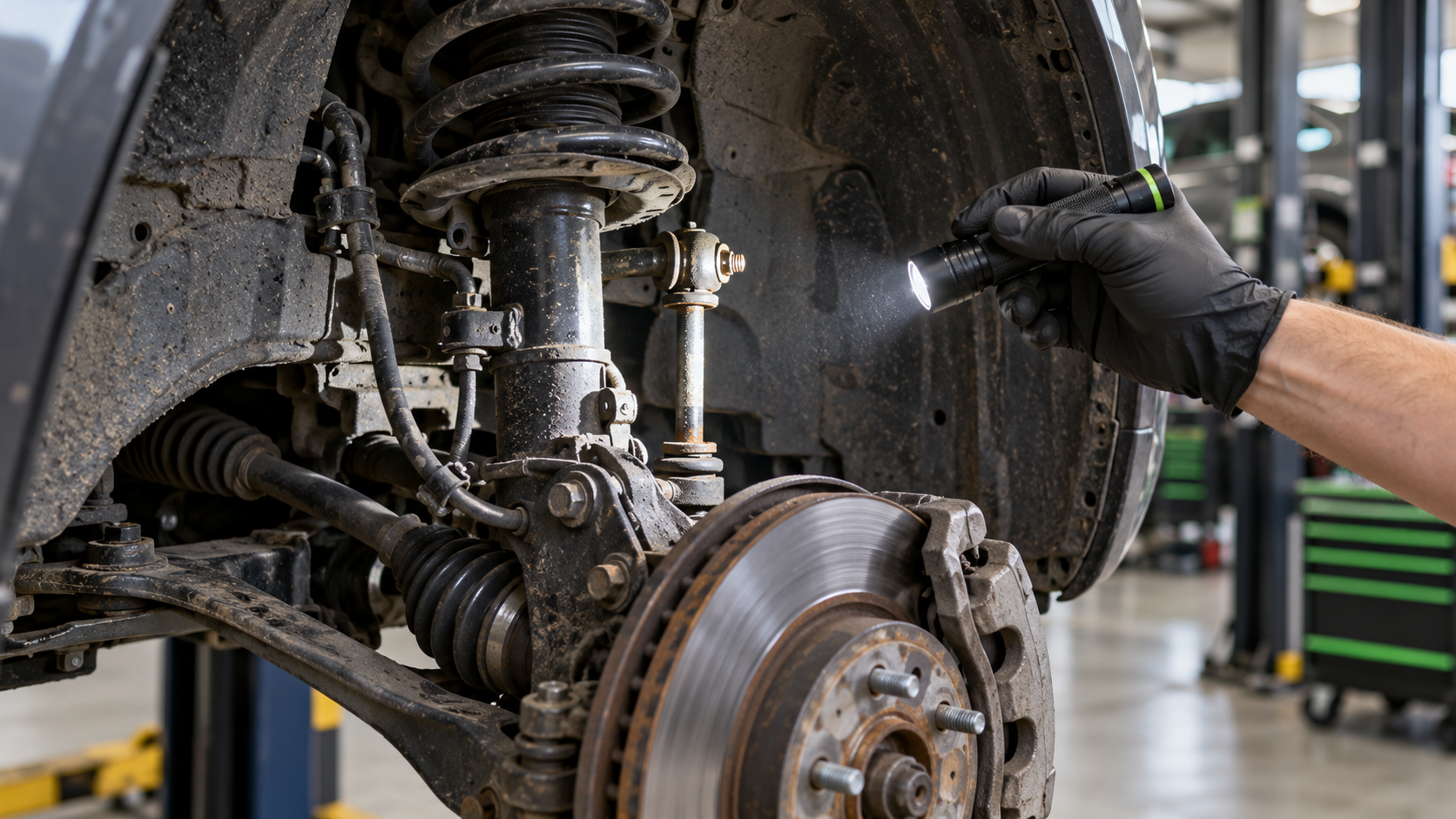
Worn or damaged components can absolutely contribute to noise, looseness and vibration.
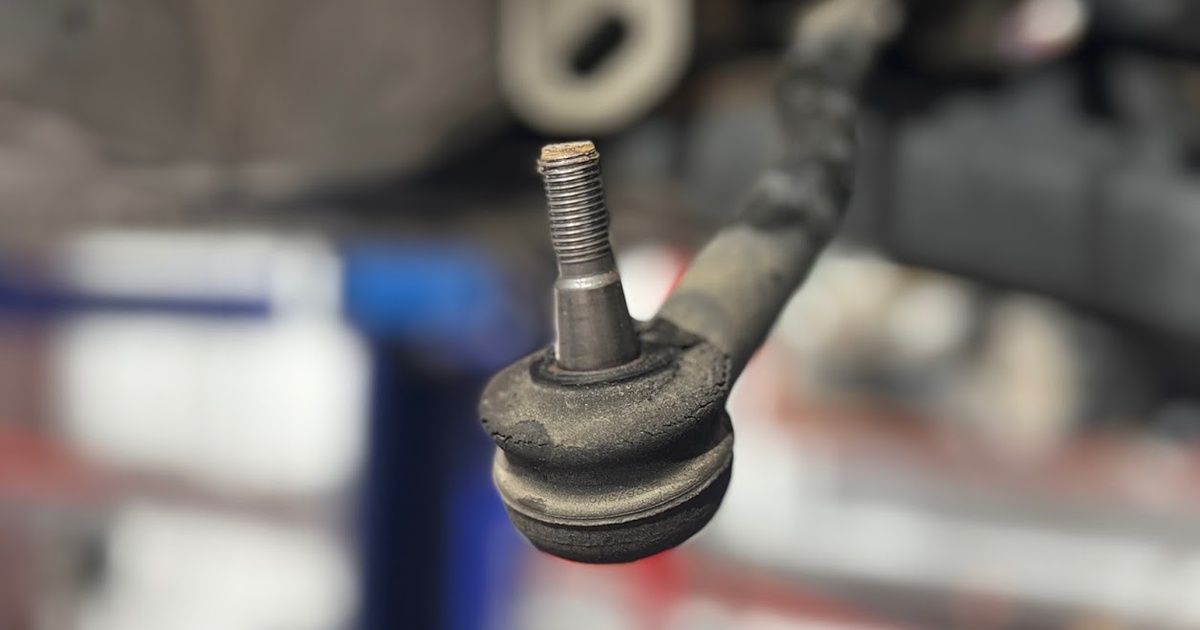
Wheel bearings, tie rods, ball joints, bushings and other steering or suspension components all play a role in keeping the wheel controlled as the vehicle moves down the road.
That's why a vibration complaint shouldn't automatically turn into:
“Balance the tires and see what happens.”
If there's looseness somewhere in the vehicle, we want to know about it.
Will an Alignment Fix a Highway-Speed Vibration?
Usually, alignment by itself isn't the first thing we'd suspect for a pure speed-related vibration.
Alignment primarily concerns the angles at which the wheels meet the road. Incorrect alignment can contribute to poor tracking, a crooked steering wheel and abnormal tire wear.
And here's where the systems can overlap:
- Bad alignment can create abnormal tire wear.
- Abnormal tire wear can eventually contribute to noise or vibration.
So alignment may be part of the story without being the immediate cause of the shake you're feeling today.
That's why diagnosing the symptom matters more than guessing the service.
Don't Just Keep Adding Wheel Weights
If your vehicle has already been balanced and still shakes, there's probably more information to uncover.
Maybe the tire has excessive road force.
Maybe the wheel is bent.
Maybe there's abnormal tire wear.
Maybe the vibration isn't coming from the tires at all.
Throwing another balance at the vehicle without determining why the previous one didn't solve it isn't much of a diagnostic strategy.
Your Car Shouldn't Shake at 70 MPH
If your car, truck or SUV develops a vibration at highway speeds, tell us exactly what you're experiencing.
When does it start?
Where do you feel it?
Does braking change it?
Does acceleration change it?
Did it begin after hitting a pothole or getting new tires?
Those details can help point the inspection in the right direction.
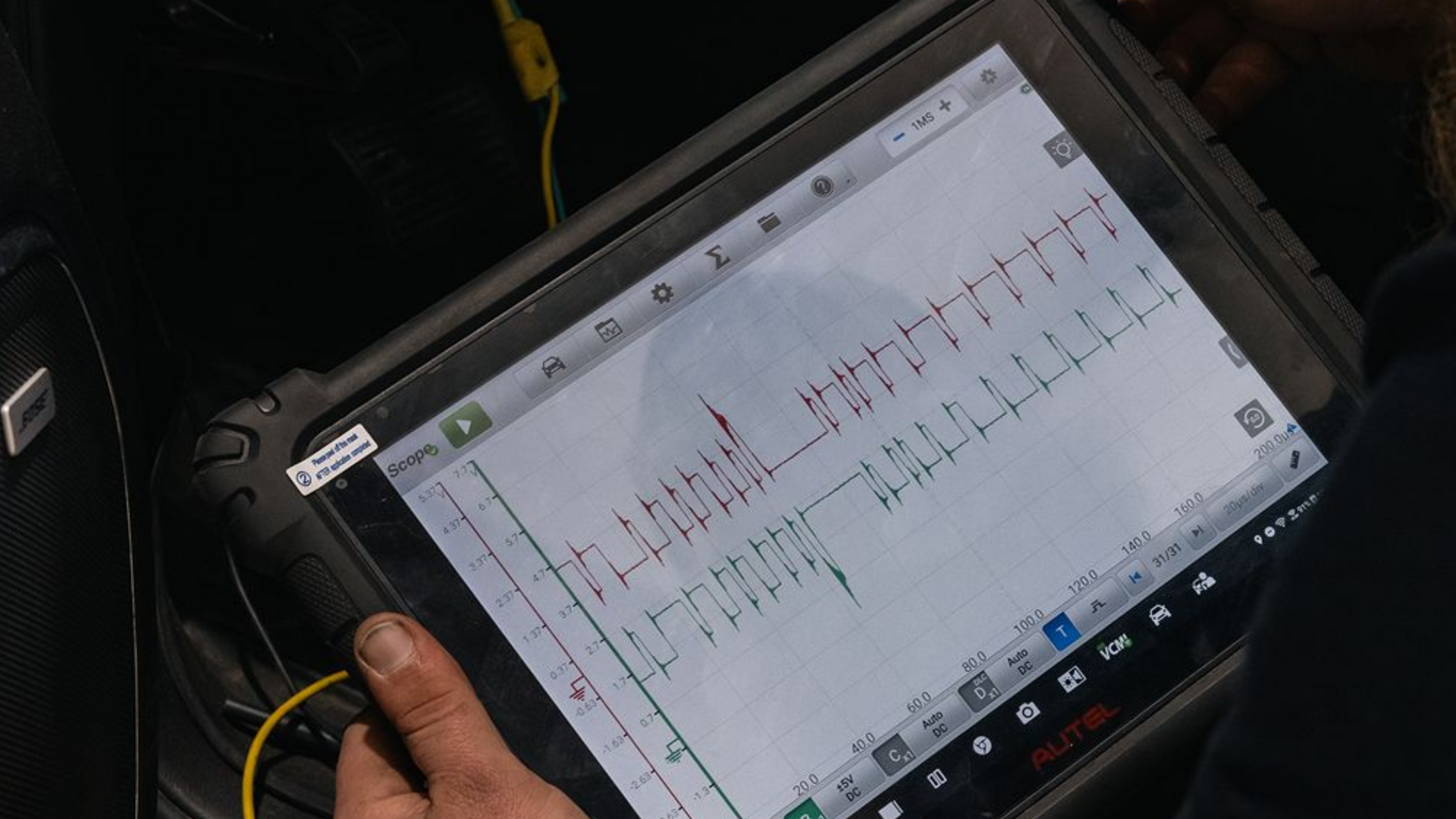
Gearhead Autoworks provides tire service, Road Force balancing, wheel alignment, steering and suspension repair and diagnostic testing from our shop in Maize, serving Wichita, Colwich, Goddard, Valley Center and surrounding communities.
Don't guess at the service. Start with the symptom.
At Gearhead, we find the source. Then we fix it right.