How to Tell If Your Brakes Need Service Soon
March 31, 2026
Brakes rarely fail without giving you some kind of warning first. The harder part is that the warning does not always look dramatic. A car can still stop, still feel mostly normal, and still be closer to brake service than the driver realizes.
That is why the early signs are worth paying attention to.
What Drivers Usually Notice First
A brake problem tends to show up as a change, not a crisis. The car takes a little more room to stop. The pedal feels different from what it did last month. The front end feels less settled when you slow down in traffic. None of that sounds severe on its own, which is exactly why people keep driving and assume they still have plenty of time.
The issue is that brake wear does not pause just because the symptoms are mild. If something has changed, the system is already trying to tell you it needs a closer look.
When Brake Noise Starts Meaning Something
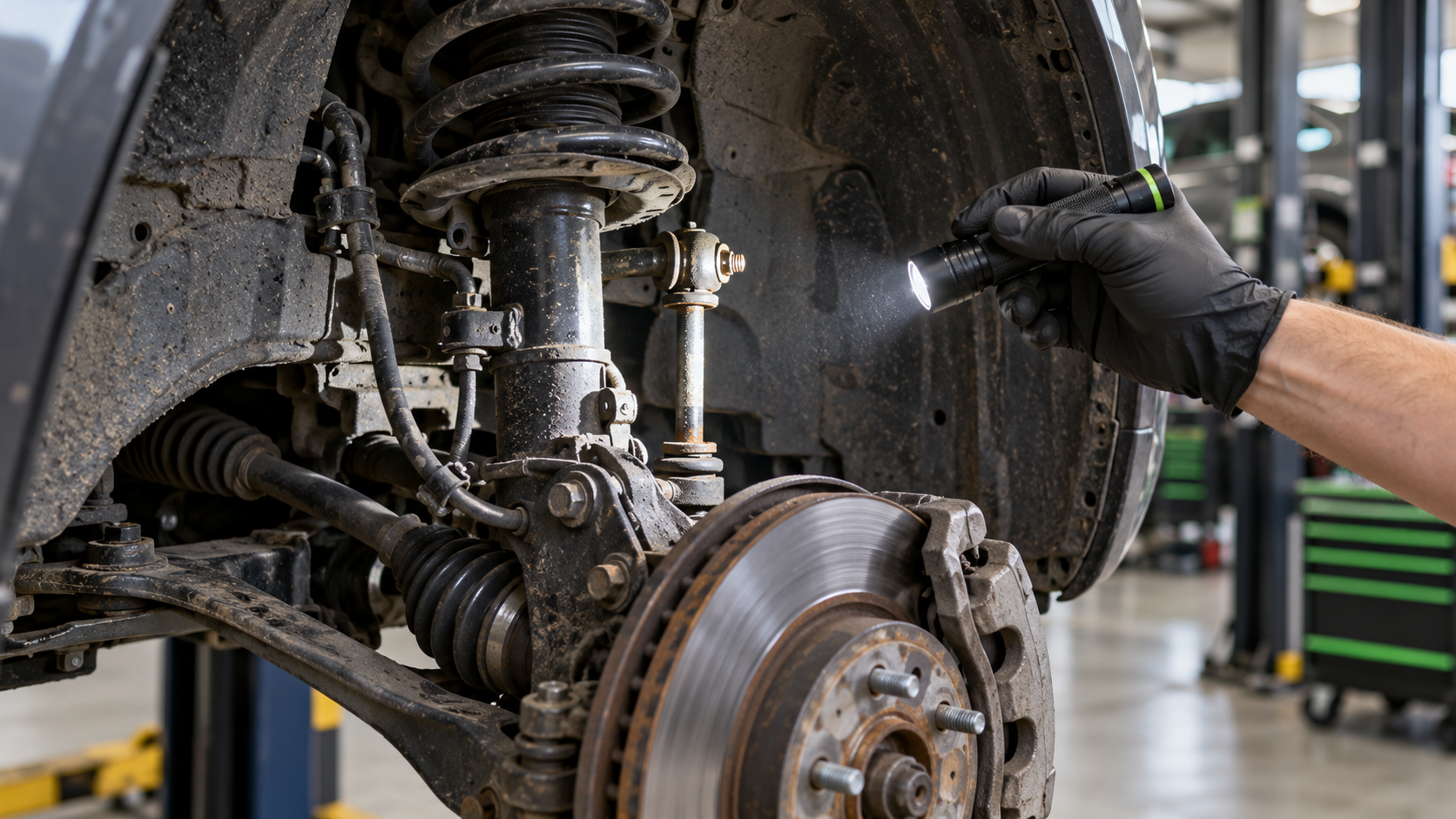
Noise is one of the clearest clues, but even that gets ignored longer than it should. A squeal during light braking can point to pad wear or hardware vibration. A scraping sound is more serious, especially if it shows up every time the brakes are used. Grinding is the sound nobody should try to talk themselves around, because by then the wear has usually gone much farther than a simple pad replacement.
The timing of the noise can help too. If it happens first thing in the morning and goes away, that can be different from a sound that keeps showing up at every stop. Either way, brake noise that repeats warrants an inspection before it becomes a much larger repair.
Why Pedal Feel Tells You A Lot
A healthy brake pedal should feel firm and consistent. If the pedal starts feeling softer, lower, or slower to respond, that change is important even if the car still stops. Drivers tend to adapt to pedal feel gradually, which makes it easy to normalize something that really is not normal.
This is where small hydraulic issues, worn pads, fluid concerns, or heat-related brake wear begin to show themselves. The car still does its job, but it no longer feels as confident or predictable. That difference is one of the biggest clues that service should not be pushed much farther.
How The Car Behaves Under Braking
Sometimes the clearest sign is not sound or pedal feel. It is the way the whole vehicle reacts when you slow down. A steering wheel shake can point to uneven rotor wear. A pull to one side can suggest one brake is working harder than the other. A nose-dive that feels more pronounced than before can make the vehicle feel less composed in normal traffic.
Those changes are easy to blame on the road, the tires, or the way the car has always felt. The truth is, when braking behavior changes, the safest assumption is that something in the brake system or its supporting parts has started to wear out. That is exactly the kind of thing regular maintenance is meant to catch before the problem spreads.
Why Brake Service Gets More Expensive If You Wait
Brake wear tends to travel. Pads wear into rotors, heat builds faster, hardware starts moving less cleanly, and a repair that could have stayed focused starts picking up extra parts along the way. That is why waiting rarely saves money. It just gives the wear more time to expand.
This is also why brakes should not be judged by one standard alone. A car that still stops is not the same thing as a car whose brakes are still working as well as they should. There is a big difference between functional and healthy, and that difference becomes even more obvious when the system is properly inspected.
When Soon Becomes Right Now
Some brake signs should move the car to the front of your list. Grinding, severe vibration, a very soft pedal, a brake warning light, or a car that pulls hard during stops should not be treated like something to get to eventually. Those signs point to a brake system that has moved beyond early wear and into a range where safety starts becoming the bigger concern.
That is the point where the question changes. It is no longer "Do the brakes need service soon?" It becomes "How much longer should this car really be driven before that service happens?" In most cases, the safest answer is: not very long.
Get Brake Service In Maize, KS, With Gearhead Autoworks
If your brakes have started sounding or feeling different, or if you're stopping the car with less confidence than before, Gearhead Autoworks in Maize, KS, can perform a brake inspection and help you fix the issue before it becomes a more expensive repair.
Bring it in while the warning signs are still early and easier to correct.